 By
ByHair loss affects more than appearance — it touches confidence, emotions, and self-image. Many of my patients at Care Well Medical Centre, Delhi ask the same honest question: “Doctor, is hair transplant surgery safe and permanent?”
Yes, when you undergo the treatment in a clean, safe, medically guided setup using your own healthy, DHT-resistant follicles. It leads to a natural hair transplant, allowing lifelong results. Still, you need to understand the factors that make this treatment safe and permanent before deciding.
Let me share what I tell my patients every day.
Introduction – Why People Ask This Question
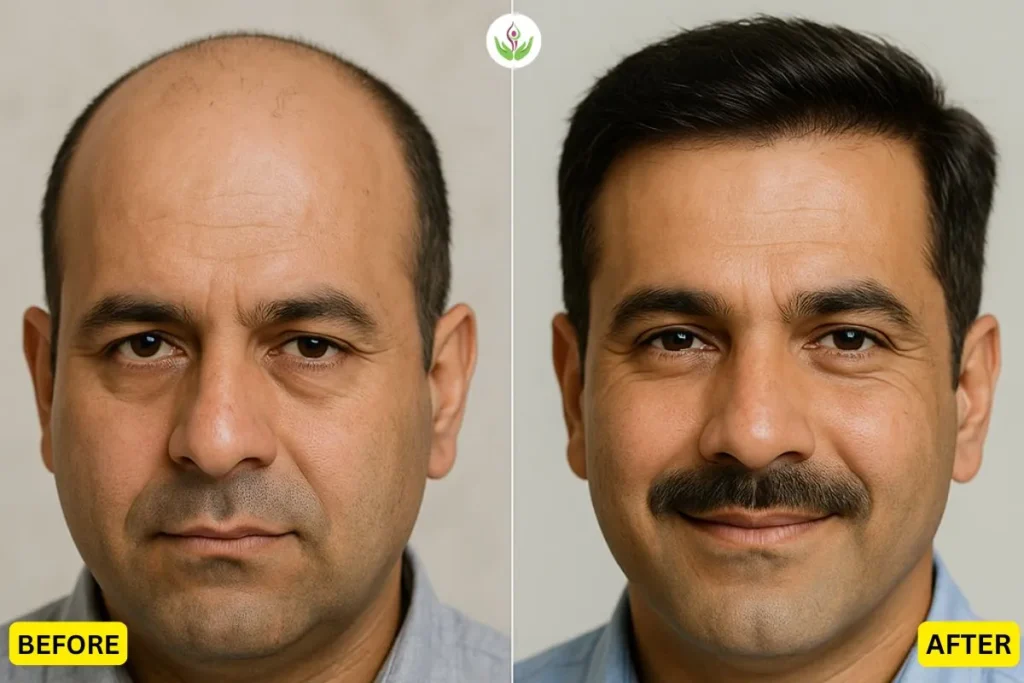
Hair fall quietly changes how a person feels about themselves. I often meet people who touch their thinning hair and softly ask, “Doctor, will my hair ever grow back safely?”
A few decades back, hair transplants seemed patchy with visible scars. The methods were basic, and the results felt uncertain. However, advanced FUE and micro-grafting techniques have helped restore hair safely, naturally, and in a scar-free manner today.
From my experience at Care Well Medical Centre in South Delhi, I can say the science behind hair transplant surgery has evolved beautifully. In this article, I want to explain what “permanent” really means, how safety and hygiene make a huge difference, and how you can enjoy strong, natural hair growth for years when the procedure is performed safely, with precision and genuine medical care.
Understanding Hair Transplant Permanence
Now that you understand why people worry about safety, let me explain what truly makes a hair transplant permanent. Almost every patient who walks into my clinic in Delhi asks, “Doctor, will these new hairs really stay forever?” It is a genuine question, and the answer lies in how your own roots behave once they are moved from one area to another.
What “Permanent” Means Medically
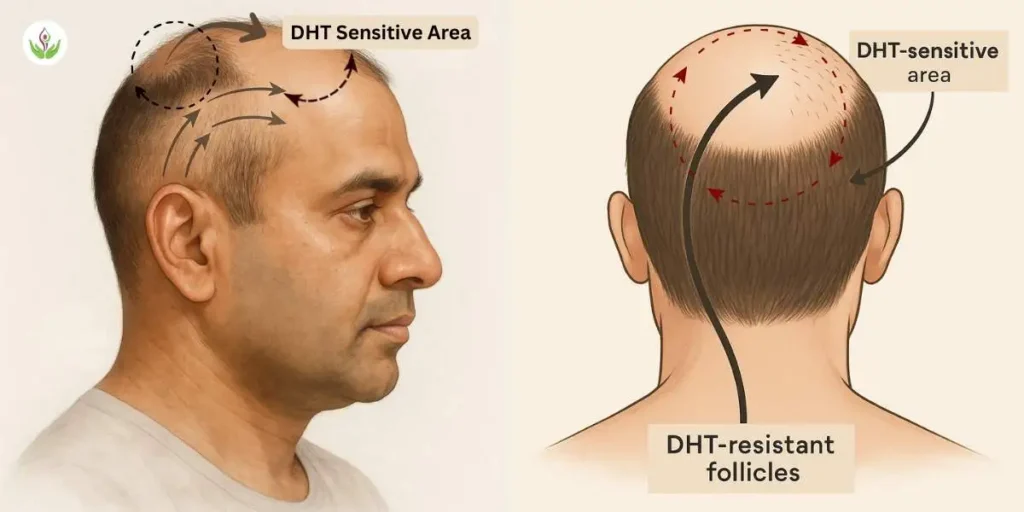
A hair transplant is not about adding fake or artificial hair. It is about shifting your own living hair roots from one place to another. The donor area, usually located on the scalp’s back or sides, contains hair roots known as DHT-resistant follicles. These naturally strong roots remain genetically immune from the hormone Dihydrotestosterone (DHT) that leads to hair fall on the top and front.
I often tell my patients to imagine these follicles as soldiers trained to survive any hormonal attack. When I transplant them to bald or thinning areas, they keep their original genetic strength. That means they continue to grow normally for the rest of your life. This is why we call the procedure a permanent restoration rather than a temporary fix. Once the grafts settle, the new hair behaves exactly like your own — you can cut it, style it, or even colour it without any problem.
Transplanted vs Native Hair
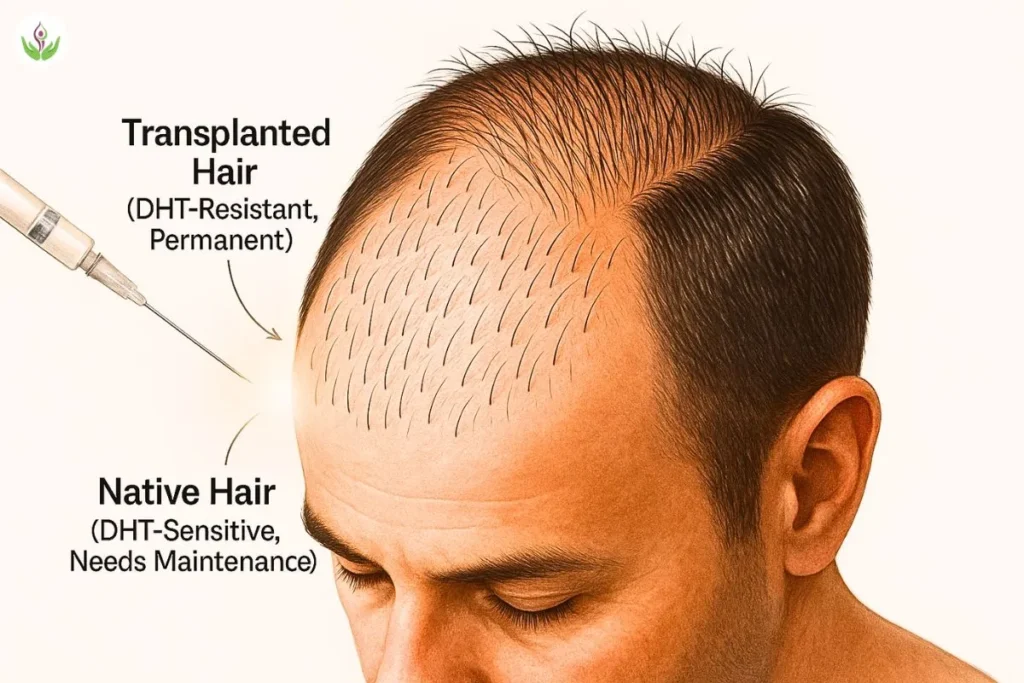
There is one thing I always make clear during a consultation. The transplanted hair is permanent because it comes from those resistant follicles, but your native hair — the ones that were already present in the thinning zone — can still reduce with age or hormonal influence.
For example, one of my patients, a 35-year-old professional from South Delhi, achieved excellent density after his first procedure. A year later, a few of his older front hairs started thinning again. We began PRP therapy along with mild DHT-blocking medication, and within months, the overall balance returned beautifully.
So, I always recommend some maintenance therapies, such as GFC, PRP, nutritional supplements, or medications, for the surrounding hair. Your scalp is much like a garden where the transplanted plants feel strong. However, older ones still need your care so that the entire space remains lush and healthy.
The Science Behind Longevity
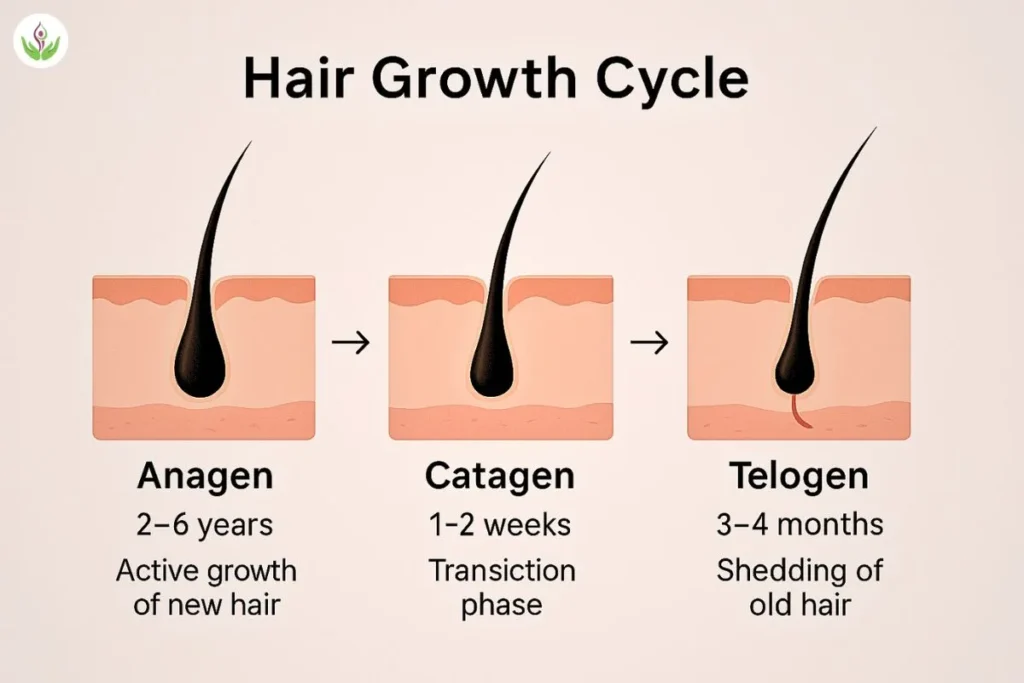
In my years of performing hair transplants at Care Well Medical Centre, Delhi, I have closely observed one simple truth — transplanted hair behaves just like your natural hair, but its strength comes from its genetic memory. These roots come from the back and sides of the scalp, areas that are naturally resistant to hormonal hair loss.
Each hair root continues its regular growth cycle even after transplantation:
- Anagen (growth phase): Active development of new hair for years.
- Catagen (resting phase): A short transition indicating slow growth.
- Telogen (shedding phase): Older hair falls and makes way for new hair.
It is normal to have some shedding in the first few weeks as Hair follicles start adapting. New growth begins during the third or fourth month. By around nine to 12 months, the transplanted hair generally attains its eventual density.
Scientific Studies Supporting Hair Longevity
Scientific evidence also supports this timeline.
A 2020 study titled “Longevity of Hair Follicles after Follicular Unit Transplant Surgery” found that transplanted grafts maintained over 85–90 % survival even after several years, depending on donor quality and technique.
👉 Read study on PMC
Another long-term review published in the International Society of Hair Restoration Surgery Forum (ISHRS, 2023) showed that while most patients enjoy durable results, density may reduce slightly after 5–10 years, especially if post-transplant care is neglected.
👉 ISHRS Long-Term Outcome Study
These have also been the case for patients who visit my Delhi- based centre. A carefully done, sterilized surgery using healthy donor follicles ensures the transplanted roots remain active for decades. However, natural aging and hormonal variations can impact your native hair. To help preserve the overall appearance, it is important to ensure gentle maintenance and regular check-ups.
A well-performed hair transplant, in short, is a biological investment that matures over time. It restores more than hair — it restores confidence and self-trust.
🎥 Expert Video Insight from Dr Sandeep Bhasin
Watch this short video where I explain how to make your hair transplant safe and truly lasting — from pre-surgery health checks to long-term maintenance.

In this video, I discuss:
- How to ensure safety before surgery through proper blood tests, diabetes control, and cardiac evaluation.
- Why a hair transplant must be performed only in a sterile medical setup, never in salons or non-medical centres.
- The average success rate of 90–95 percent when done with precision and postoperative care.
- How to maintain transplanted hair using PRP, Minoxidil, DHT blockers, and nutrition for long-term results.
- Common myths — such as fears about brain infection or cancer — and why they are completely false.
You just need to take note of these to understand what’s required for natural, safe, and long-lasting results.
How Safe Is Hair Transplant Surgery?
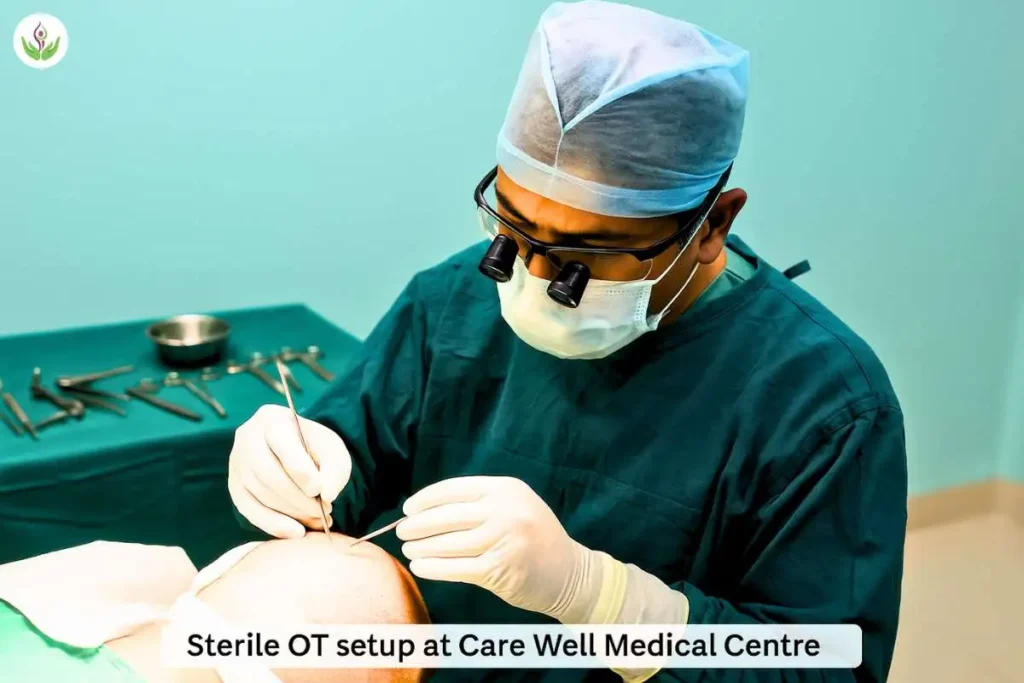
In my experience, most patients worry less about the result and more about safety. The good news is that when done with proper preparation, in a sterile medical setup, and under expert hands, a hair transplant is one of the safest cosmetic surgeries available today.
Let me explain what genuine safety means in my practice at Care Well Medical Centre, Delhi.
Pre-Surgery Safety Checklist
Every safe procedure starts with knowing your body. Before scheduling surgery, I make sure every patient is medically fit. At our centre, we conduct a full health evaluation that includes:
- Blood sugar and diabetes control – Uncontrolled sugar can delay the healing process..
- Blood pressure and heart assessment – Helps determine potential cardiovascular risks.
- Routine blood tests – These include CBC, viral markers, kidney and liver function.
Only after these checks do we issue fitness clearance for the transplant. Patients with hypertension, thyroid imbalance, or any chronic illness are stabilized first after coordinating with their physician. This is made to ensure a safe and predictable procedure for these patients.
Importance of a Sterile Clinical Environment
A hair transplant is still a surgery — and it must never be done in salons or beauty parlours. The environment matters as much as the surgeon’s skill.
At Care Well Medical Centre, each procedure takes place in a fully equipped minor operation theatre with:
- HEPA-filtered air and sterilized instruments
- Disposable drapes, needles, and gloves
- Medical-grade disinfectants for cleaning
- NABH-level hygiene standards
Every graft is handled with sterile forceps under magnification, and my entire team follows aseptic technique throughout. Patients often tell me they feel relaxed the moment they step into a proper surgical suite — that sense of safety is priceless.
Doctor’s Expertise and Equipment Quality
Even the best setup needs experienced hands. The surgeon’s precision and the quality of instruments directly determine the success rate.
In my clinic, I personally perform every step — from donor harvesting to graft implantation — using fine punches and implanters that minimise tissue trauma. My trained surgical staff works under high-power magnification for accuracy.
Let’s consider a recent case involving 2,500- graft FUE, where we witnessed 95% graft survival. As a result, the patient came back to work within two days without swelling or infection. These consistent results come with advanced technique, sterile tools, and clinical expertise.
When all three layers — medical fitness, sterile setup, and surgical expertise — come together, a hair transplant becomes exceptionally safe. Choose your surgeon and clinic with care; your safety truly begins there.
Success Rate and Longevity of Results
When patients visit me for a consultation, one of the first questions they ask is, “Doctor, how successful is a hair transplant, and how long will it last?” I always tell them that success begins in the operating theatre but continues with how well you care afterward. A good transplant is not just about the day of surgery — it is about how your body accepts and nourishes every graft in the months to come.
Average Success Rate in Modern Clinics
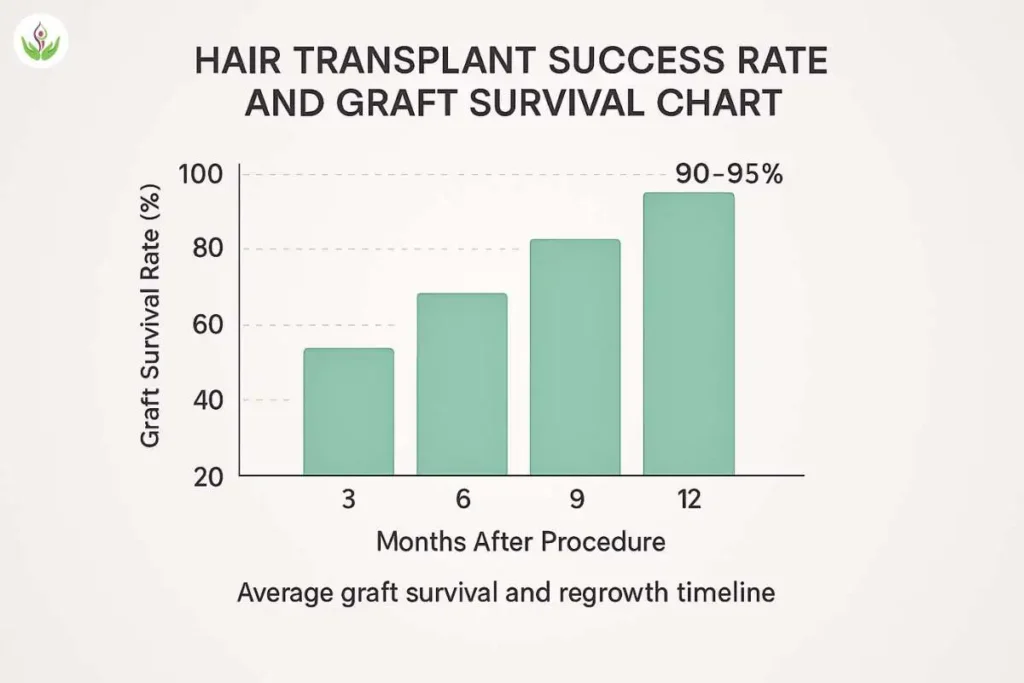
Highly reliable outcomes have been made possible today due to refined Follicular Unit Extraction (FUE) and Direct Hair Implantation (DHI) techniques. With experienced healthcare professionals, graft survival range can be around 90-95% under ideal conditions.
In my own practice at Care Well Medical Centre, Delhi, we regularly achieve these results. Most patients start seeing new growth by the fourth or fifth month, and by nine months, the hairline looks natural and even. You witness a complete transformation within a year.
As every follicle matters, keep them hydrated to prevent any damage. That is why we keep each graft in a chilled plasma solution until it is safely implanted. This small detail makes a big difference in survival and density.
How Long Transplanted Hair Lasts
Transplanted hair usually lasts a lifetime as it emerges from donor areas offering resistance against DHT that causes the most hair fall. However, some initial hair shedding after transplant is normal and part of the natural growth cycle. As these roots come in bald zones, they retain their original genetic power and keep growing as your normal hair.
You can cut, style, or colour them freely — they are your real hairs, simply relocated. However, it is natural for your native hair (the older, thinner ones) to keep shedding slowly over time. This does not represent a procedural failure. It only means the operational methodology of aging and hormones. Balancing this gradual change may require mild treatments and regular check-ups. For detailed insights, read this guide on how long a hair transplant lasts and what affects its longevity.
Factors Affecting Longevity
From my years of experience, several factors influence how long your results remain full and healthy:
- Age and genetics: Younger patients or those with active hair fall may need future touch-ups.
- Quality of donor follicles: Strong roots from dense donor areas survive better.
- After-care routine: Grafts settle faster when following post-surgery instructions.
- Lifestyle habits: Sleeping adequately, eating a balanced diet, and keeping low stress can help maintain strong scalp health.
- Scalp maintenance: Both transplanted and native hair become strong due to improved blood circulation through regular PRP or GFC therapy.
Patients who follow this routine often enjoy lasting results. These include thicker, healthier hair that continues for many years.
A successful hair transplant techniques happens with a coordinated effort between doctor and patient. When it is performed safely, with precision and proper after-care, the results can truly last a lifetime — not just on your scalp, but in your confidence too.
What Happens After Surgery – Growth Timeline
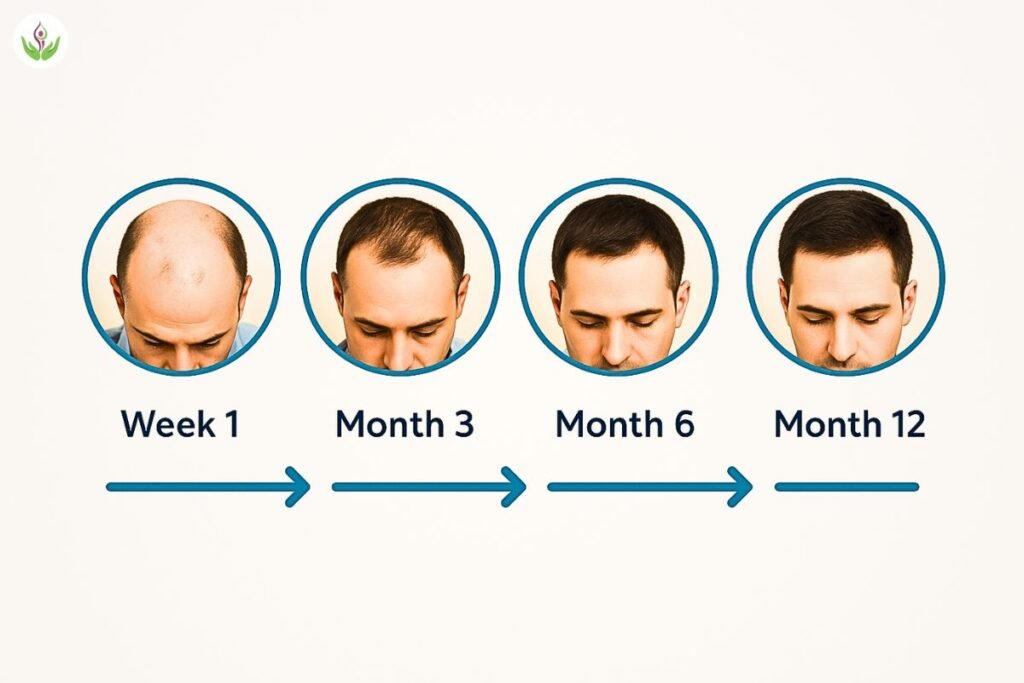
Almost every patient calls me within a week of surgery, a little worried and asking, “Doctor, my new hair is falling — is something wrong?” I ease their nerves by reassuring them that it happens during the natural recovery process. After a hair transplant, your scalp undergoes a few predictable phases before the emergence of new hair growth. So, what does it mean? Let me explain it so that you can stay calm and confident during the process.
Shedding Phase (Weeks 1–4)
The first few weeks see the fallout of some transplanted hairs. This is called the shedding phase, which often causes anxiety among people. However, it’s very normal. The root remains alive when I move a follicle from the donor area to a new site. However, the old hair shaft detaches. Consider this as autumn before spring, where we see the old leaves paving the way for new ones. Importantly, the roots remain safe beneath your skin, looking to sprout again upon scalp healing. As the first month ends, the grafts remain secure. Further, your scalp starts to feel normal again.
New Growth Phase (Months 3–6)
Between the third and sixth months, your transplanted follicles begin to awaken. You will notice fine, soft baby hairs first — almost invisible at the beginning. You can explore the hair transplant results timeline to understand month-by-month growth progress. Gradually, they become darker and thicker. This was further corroborated by a recount from one of my South Delhi patients who once expressed his excitement about witnessing the first tiny strands by the fourth month. Now, every morning, he styles his hair before going out for work. This stage requires adequate scalp care and nutrition. I generally vouch for a balanced diet, intake of supplements such as biotin, and undergoing maintenance therapies such as GFC or PRP. This helps ensure robust hair follicles and enhanced growth.
Maturation Phase (Months 9–12)
As the ninth month comes, you will have fuller and more natural hair. You witness denser strands, improved texture, and a perfect blending of your overall appearance with your existing hair. As the 12th month arrives, most patients find a thicker, confident, and naturally looking hairline. In some cases, improvement continues for up to 18 months. Usually, I remind my patients that the surgery is the root, while patience ensures great results. Proper care and follow-ups help ensure constant growth of strong new hair for years. The growth will be natural and permanent.
Common Side Effects and Healing Period
Just as with any surgery, a hair transplant also requires a short healing period. However, upon a successful transplant, you will recover quickly, smoothly, and safely. If I consider my experience, I have witnessed many patients recovering beautifully within days after understanding what to expect and what to do as part of the aftercare guidelines. Let me walk you through the common sensations and signs of healing after a transplant.
Immediate Post-Surgery Reactions
Your scalp area may feel a bit of swelling, mild redness, or tenderness during the first few days. However, they are just part of your body’s healing process. Most patients describe these as a light tightness instead of pain.
At Care Well Medical Centre, we offer patients a comprehensive aftercare plan, including anti-inflammatory medicines and antibiotics, to contain swelling. I also recommend that patients sleep with a slightly elevated head and avoid contact with the grafted area for a few days.
Normally, it may take three to five days for these symptoms to be over. And by the first week’s end, your scalp feels and looks normal again.
Temporary Symptoms
With your scalp continuing to heal, here are some things you might experience:
- Light crusting over the grafted area (naturally flakes off within 10–12 days)
- Mild itching as new skin cells form
- Tightness or dryness on the scalp during healing
These remain short-lived and harmless recovery signs. I suggest that you avoid scratching or rubbing the area. Instead, apply a saline spray or a mild baby shampoo for a clean and hydrated scalp. Within two weeks, you again feel calm, comfortable, and healthy with your scalp.
Long-Term Safety Assurance
Many patients ask, “Doctor, can a hair transplant cause brain infection or cancer?” The answer is absolutely no. A hair transplant is a superficial skin procedure, limited to the outer layer of the scalp. It does not affect the brain, memory, or vision — these are all common myths I hear from anxious patients.
Safety is mainly assured with these three things:
- A sterile-based healthcare environment
- An experienced surgeon
- And strict post-op care
If you want to heal smoothly, follow these medical instructions carefully:
- Finish your entire prescribed antibiotics course.
- Don’t smoke and drink alcohol for a minimum of two weeks.
- Don’t expose your scalp to direct sun, dust, or sweat.
- Do turn up in your follow-up visits for effective monitoring and guidance.
You heal quickly and easily after following these steps. Within weeks, you will forget you ever had surgery — except when you smile at your new hairline in the mirror.
Post-Surgery Care for Lasting Results
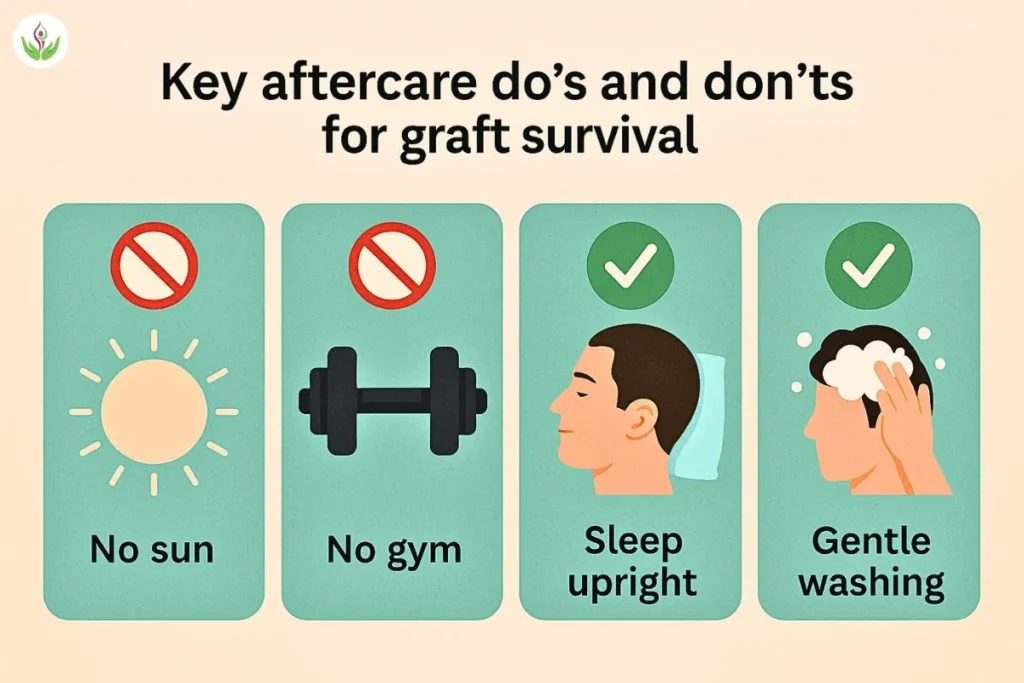
Don’t be just confined to a successful hair transplant in an operation theatre. You need to supplement it by taking care of yourself in the weeks that come afterward. I have seen patients who pay a little more attention to aftercare, heal faster, experience thicker regrowth, and witness more natural outcomes that sustain for years. Let me share what really works.
Essential Aftercare Instructions
You need to exercise care during the first weeks after surgery for graft survival. Follow these proven after hair transplant care tips to speed recovery and improve graft survival rates. As your new follicles remain delicate, you need to take every small precaution.
Do follow these simple yet impactful habits to witness a positive difference:
- Washing: Use your fingertips, not nails, to apply a mild baby shampoo or medicated cleanser gently after 72 hours. Also, stay away from strong water pressure.
- Sleeping posture: A slightly elevated head on two pillows while sleeping can curb swelling and protect your grafts against friction.
- Avoid sunlight and gym: Say NO to scalp irritation by avoiding direct sunlight exposure, sweat, and physical strain. Don’t work out heavily or engage in outdoor activities for a minimum of 10-14 days.
- Hands off: Don’t touch or scratch the scalp to protect the newly placed grafts.
At Care Well Medical Centre, my team and I guide each patient through the journey involving various steps. Patients feel comfortable and remain clear in their heads.
Lifestyle and Nutrition Support
For hair to continue growing, a successful surgery needs to be complemented by a good lifestyle. Hair follicles, a living tissue, grow with improved blood circulation, balanced nutrition, and a calm mind.
I always tell my patients to avoid stress, poor diet, and dehydration, as these can make follicles weaker. For healthy regrowth:
- Get your scalp hydrated by drinking a minimum of 2.5-3 litres of water daily.
- Adhere to a protein-rich diet comprising eggs, paneer, nuts, and lentils.
- Eat foods rich in zinc, iron, and biotin, including spinach, amla, and seeds.
- Sleep enough, perform light yoga, meditate, or walk a little during the evening to manage stress.
Ensuring stronger transplanted follicles and faster growth requires a well-nourished and relaxed body.
Medical Maintenance Therapies
Once your grafts stabilize, usually after six to eight weeks, consider certain medical treatments designed for long-term density maintenance. Although not mandatory, they have produced significant results for many of my patients.
Here is what I often recommend:
- Minoxidil (2%–5%): Ensures blood flows properly along the scalp and encourages new growth. You should begin only when I or your surgeon clears you after surgery.
- DHT blockers (like Finasteride): Curbs hair loss in nearby native hair and maintains overall thickness.
- PRP or GFC therapy: Combines your own growth factors for deeply nourished follicles. I usually advise 3–4 sessions a year for optimal results.
- Supplements: Consume omega-3 fatty acids, biotin, and multivitamins for significantly improved hair strength and texture.
You need to constantly follow good habits and leverage gentle medical support for natural, dense, and permanent hair.
When a Hair Transplant Can Fail or Need Re-Doing
Let me be very honest — in most cases, hair transplants work beautifully. Every now and then, patients come back to me and say, “Doctor, the density is not to my liking.” I see this as a way to further improvise by understanding the alternative stuff that could have been done in that situation. A hair transplant represents a living surgery, where follicles mimic a tiny organ. The success of this surgery rests on its management, placement, and effective healing afterward.
Over the years, I have observed that when results fall short, the reasons usually fall into two categories — technical precision and patient lifestyle.
Surgical or Technical Reasons
A hair transplant’s real success starts well before the first graft implant. Understand all factors behind hair transplant failure so you can make informed choices about your surgeon and technique. It begins with immaculate planning, donor choice, and gentle follicle management.
Here are some common surgical or technical reasons I have seen that can affect outcomes:
- Weak donor selection: Using thin or miniaturized hair from an unstable zone.
- Improper graft storage: Grafts drying out or left outside too long.
- Overpacking grafts: Placing too many follicles too close can reduce oxygen supply.
- Infection risk: If sterile conditions are not maintained properly.
- Lack of magnification or precision tools: Can increase follicle trauma.
At Care Well Medical Centre in Delhi, we follow a strict micrografting protocol. Every graft is stored in chilled saline, handled under magnification, and implanted precisely to maintain near 100% survival. Small details such as this can make results sustainable for decades.
Patient-Related Factors
Even with perfect surgery, results can fail if post-care is ignored. Learn about the reasons for hair loss after transplant and how to prevent them early through better scalp care. I am often heard reminding patients that the doctor gives you roots, but how disciplined you stay after surgery matters to your hair growth.
Below are some common factors that potentially affect graft survival after surgery:
- Scratching or touching the scalp too early – can make grafts lose their shape.
- Smoking or alcohol use – Curbs blood circulation and oxygen supply.
- Skipping medicines or antibiotics – Raises the scope for infections.
- Uncontrolled diabetes or thyroid issues – delay healing.
- Chronic stress or poor sleep – Hormonal balance goes off, causing slow growth.
Embrace these simple habits, such as gentle washing, hydration, a nutritious diet, and adequate sleep, to witness a positive difference. A calm mind and healthy body always reflect on your scalp.
Corrective or Second Transplant Options
Years later, some patients can return for refinement, not because their transplant would have failed. But because they may witness continued thinning of their natural hair. Expect evolution in your hairlines as time goes on. With a small touch-up, hairlines can look even more natural.
A corrective or second hair transplant is safe and effective when done with careful assessment. Typically, such sessions involve:
- 500–1,000 grafts for filling small gaps or redefining the hairline.
- A detailed donor-area evaluation to check remaining density.
- Matching new grafts with the existing hair direction and texture.
I usually recommend waiting at least 10–12 months after the first transplant before considering a second session. Many of my Delhi patients choose to refine their look after five or six years, once their hairstyle or age changes. It’s a normal part of long-term maintenance — not a redo, but a fine-tuning for better harmony.
The key message I always share is this: a hair transplant rarely “fails” completely. Correct handling and effective aftercare can help correct imperfect outcomes beautifully. It is not only about hair restoration, it’s also about getting that old confidence and balance back, maybe step by step.
Who Should Avoid or Delay Hair Transplant Surgery
Not all can undergo a hair transplant immediately. In my experience, some patients need to wait until their health or hair pattern is stable. Safety sits on the top of the treatment agenda, followed by results.
Medical Contraindications
I make sure to check patients’ overall health before surgery. If any of the following conditions prevail, postponing the procedure makes sense:
- Alopecia Areata: It causes autoimmune hair loss, leading to the death of transplanted follicles.
- Uncontrolled Diabetes: Increased scope for a slow healing process and infections.
- Bleeding or clotting disorders: Excessive bleeding can happen during surgery.
- Active scalp infection: Let the scalp remain healthy before the surgery.
Once these issues are treated or under control, a transplant can be done safely.
Age and Hair-Loss Pattern
I often meet young men in their teens wanting early surgery. I gently explain that it is better to wait. Hair loss patterns keep varying till you become 25 years old. At the same time, uneven results can be the case later when operating too soon.
Recently, I consulted a 20-year-old Delhi-based student who seemed worried about his receding hairline. I, therefore, did not advise him of surgery at first. Instead, I guided him on ways to control stress, maintain nutrition, and ensure scalp health. Six months later, his density improved naturally — no surgery needed.
Avoid or delay surgery if you have:
- Diffuse thinning where even the donor area looks weak.
- Stress-related or nutritional hair loss that may recover naturally.
- Recent major illness or surgery — the body needs rest first.
Waiting for stability ensures grafts last longer and look completely natural.
Myths vs Facts About Hair Transplant Permanence
Over the years, I have met countless patients in Delhi who walk into my clinic with the same doubts — “Doctor, is a hair transplant really permanent?” or “Can it affect the brain?” I understand these worries completely. You can always be misguided online, where too much misinformation prevails. So, I make sure to bring back clarity and calm. Below are some myths that I usually hear, and facts patients should be aware of before deciding on treatment.
| Myth | Fact (Explained by Dr Sandeep Bhasin) |
| Hair transplant is temporary. | Transplanted follicles are taken from the back of the scalp — a DHT-resistant zone. These hairs are genetically programmed to last for life and behave just like your natural hair once they grow. |
| It causes brain infection. | Completely false. A hair transplant is a superficial skin procedure, limited to the outer scalp. It never reaches or affects the brain, memory, or nerves. |
| All hair stops falling after transplant. | Only transplanted hair is permanent. Your native hair may still thin over time if not maintained. I often recommend Minoxidil, PRP, or balanced nutrition to support long-term density. |
| It looks fake or plug-like. | Not with modern techniques. Applying FUE and DHT helps us design natural hairlines that match the accurate direction and angle, and ensure seamless graft blending. It won’t be easy for even close friends to tell the difference. |
When patients see these facts clearly, I notice their anxiety melt away. They realize that a hair transplant, when done properly and cared for with patience, offers lifelong, natural-looking results without any risk or artificial feel. And honestly, when a patient walks out smiling, saying, “Doctor, I wish I had done this earlier,” that is the most rewarding part of my work.
Scientific Evidence & Doctor’s Observation
When patients visit me at Care Well Medical Centre in Delhi, they often ask a very practical question:
“Doctor, will my transplanted hair sustain throughout my life?”
I feel a bit empathetic hearing this. With hair loss, everything is affected – appearance, confidence, and identity.
This makes me elaborate on the truth, combining science and real-world experience.
Clinical Studies
Hair transplantation is carried out these days using cohesive research, not marketing claims.
Several respected studies have analyzed the longevity of transplanted follicles and the reasons for the same.
A comprehensive review, published in the Indian Journal of Plastic Surgery – Factors Affecting the Growth and Survival of Follicular Grafts, demonstrated average graft survival rates of 90-95% when handling follicles gently, keeping them hydrated, and implanting them within safe time limits.
Another long-term follow-up study, A Ten-Year Retrospective Analysis on the Long-Term Survival of Hair Transplants, found that most transplanted hairs continue to grow naturally even a decade after surgery.
These studies validate what I have consistently observed in my own practice — when DHT-resistant donor follicles are transplanted carefully and after-care is followed, results remain stable for many years, often a lifetime.
Real-World Experience
At my South Delhi-based clinic, I have been part of many successful hair restoration procedures for over a decade.
Our patient follow-ups show that around 93 percent maintain strong, visible growth even five years after surgery.
Most never need a repeat procedure — only simple maintenance therapies like PRP, GFC, and nutritional support.
I still remember one of my earliest patients — a 35-year-old software engineer. Every year on his “hair anniversary,” he sends me a selfie with a wide smile. Five years on, there is no impact on his hairline. It still looks as dense and natural as it did six months after surgery. These moments are why I am in this healthcare profession – witnessing people recover their old confidence is a priceless feeling.
As I usually remind my patients:
“A good surgery gives you hair, but good habits keep it thriving.”
This combo is what leads to long-lasting transplant success – science, skill, and self-care.
Final Thoughts – The Real Meaning of “Permanent”
When I say a hair transplant is permanent, I mean the transplanted roots will keep growing naturally for life. But permanence does not mean you can forget your hair. Your scalp still needs care, nutrition, and a healthy lifestyle to protect what you have gained.
In my experience at Care Well Medical Centre, Delhi, lasting results come from teamwork — the surgeon’s skill and the patient’s discipline. If you ever plan a transplant, choose an experienced specialist who values both safety and honesty.
For personal guidance, you can visit me, Dr Sandeep Bhasin, at Care Well Medical Centre, C.R. Park, South Delhi. 👉 For a complete overview of techniques, results, and pricing, read our Hair Transplant in Delhi guide.
FAQs – Is Hair Transplant Permanent and Safe?
Hair transplant remains a permanent solution to fix baldness. I use DHT-resistant donor follicles that continue to grow naturally for life. Once transplanted and healed, these hairs do not fall out again.
Yes, it remains permanent for everyone provided your health, genetics, and post-care remain good. At my Delhi-based clinic, I have witnessed results continuing for decades, provided patients adopt adequate scalp hygiene and follow-up therapies such as GFC or PRP.
It is safe only after medical clearance. At Care Well Medical Centre, we always check blood sugar, blood pressure, and heart fitness before surgery. Once cleared, the results are both safe and permanent.
No permanent loss occurs. However, it is normal to have mild shedding during the first few weeks. After three months, new hair usually grows and continues to do so all your life.
I don’t think so; I use local anesthesia to make transplants almost painless. For a few days, you may feel slightly sore or swollen. However, there is no impact on either your brain or nerves.
People facing these conditions – Alopecia Areata, uncontrolled diabetes, or blood-clotting disorders – should either stay away or delay surgery. That’s why I conduct diagnostic tests to ascertain whether it’s safe to go for the surgery.
Yes, women struggling with a receding hairline or patterned hair thinning can also witness lasting outcomes. Firstly, I spot hormonal or nutritional imbalances before suggesting surgery.
The transplanted follicles last a lifetime because they are genetically DHT-resistant. However, you may see natural non-transplanted hair becoming thin over time. To help retain density, maintenance therapy is needed.
Yes, if done by an experienced surgeon in a sterile clinical setup. Avoid parlour-based or non-medical centres. At my clinic in C.R. Park, South Delhi, every procedure follows full surgical-safety protocols.
Yes. In rare cases, a second or touch-up session may be done after several years if more coverage is desired. The transplanted hair from the first session remains permanent.