By
ByAs a surgeon and medical wellness practitioner, I often meet patients who have heard of hyperbaric oxygen therapy but are unsure what it really means. Let me explain it to you as I would in my consultation room.
Hyperbaric Oxygen Therapy, often called HBOT, is a medical treatment in which a patient breathes pure oxygen inside a special pressurised chamber. Technicians increase the air pressure inside the chamber to two or sometimes three times higher than what we normally experience. Under this controlled pressure, the lungs are able to absorb a much higher amount of oxygen than possible under normal conditions.
The purpose of this therapy is simple yet powerful — to improve oxygen delivery to every cell and tissue of the body. When tissues receive more oxygen, their ability to heal, fight infection, and recover from injury improves naturally. Doctors and specialists worldwide use this principle to treat chronic wounds, radiation injury, and various oxygen-deprived conditions.
Doctors always perform HBOT under proper medical supervision. It is an evidence-based therapy, approved and practised in hospitals and certified centres across the world, including here in Delhi. When guided correctly, it can safely support the body’s natural healing processes.
Hyperbaric Oxygen Therapy (HBOT) is a medically approved treatment that increases oxygen delivery to the body’s tissues using a special pressurised chamber, enhancing healing and recovery under doctor supervision.
How Does Hyperbaric Oxygen Therapy Work?
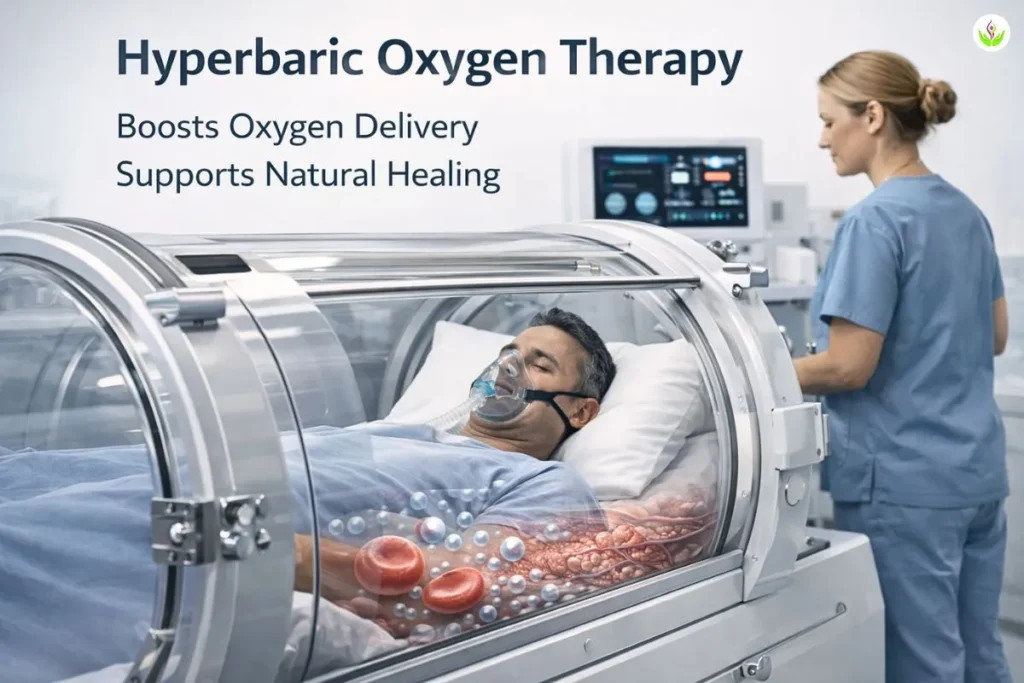
Many patients ask me, “Doctor, how does this oxygen therapy actually help my body heal?”
Let me explain it in simple words.
During Hyperbaric Oxygen Therapy, technicians gently increase the surrounding air pressure in the sealed medical chamber while you lie inside it. You continue to breathe pure medical oxygen while this pressure allows your lungs to take in far more oxygen than you could in normal air.
Under these special conditions, oxygen dissolves not only into red blood cells but also directly into the plasma — the fluid part of your blood.
This means oxygen now reaches areas that previously lacked it, such as:
- Damaged or inflamed tissues
- Wounds with poor circulation
- Areas recovering after surgery or radiation
As a result, the body’s healing capacity improves naturally. You may notice:
- Less swelling and inflammation
- Faster recovery in chronic wounds
- Better oxygen flow to tissues that need repair
In simple terms, this therapy helps your body receive oxygen where it was previously missing — and that extra oxygen is what accelerates recovery.
Inside a pressurised chamber, oxygen dissolves deeply into the plasma and reaches tissues with poor blood flow, supporting natural repair and faster healing.

Watch Dr Sandeep Bhasin explain how Hyperbaric Oxygen Therapy works and which conditions benefit from it (from our main HBOT page).
Why Oxygen Under Pressure Matters
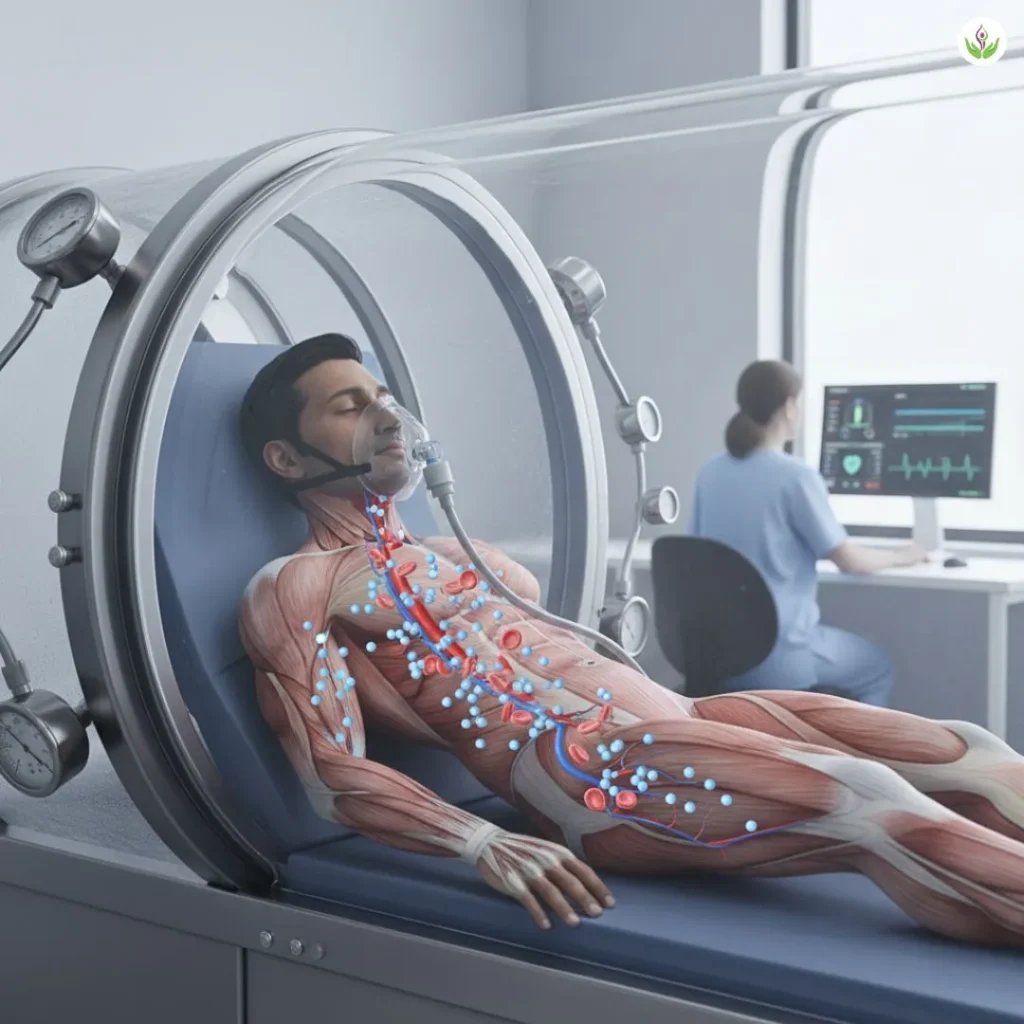
Many patients tell me, “Doctor, I already receive oxygen in the hospital. How is this therapy any different?”
The answer lies in one powerful word — pressure.
When we breathe normally, the air around us contains about 21 percent oxygen at standard atmospheric pressure. Under these regular conditions, our lungs absorb only a limited amount of oxygen, which travels in the blood mainly through red blood cells. That is enough for healthy tissues, but when there is injury or poor circulation, the amount of oxygen reaching those areas becomes insufficient.
During Hyperbaric Oxygen Therapy (HBOT), the situation changes completely. Inside the hyperbaric chamber:
- The air pressure has increased two to three times higher than normal.
- You breathe 100 percent pure medical oxygen.
- Because of this increased pressure, oxygen dissolves not only in red cells but also directly into the plasma and other body fluids — lymph, cerebrospinal fluid, and even bone tissue.
In medical terms, this rise in “partial pressure of oxygen” allows oxygen to penetrate much deeper into the body’s tissues. It reaches areas that ordinary oxygen therapy simply cannot access.
That is why HBOT is not just about breathing more oxygen — it is about using pressure to deliver oxygen where healing has slowed or stopped.
To understand this difference in greater detail, you can read:
👉 Oxygen Under Pressure vs Normal Oxygen Therapy (Coming Soon)
Pressure multiplies oxygen’s healing reach—making it medically therapeutic rather than just supportive.
Medical Conditions Treated with HBOT
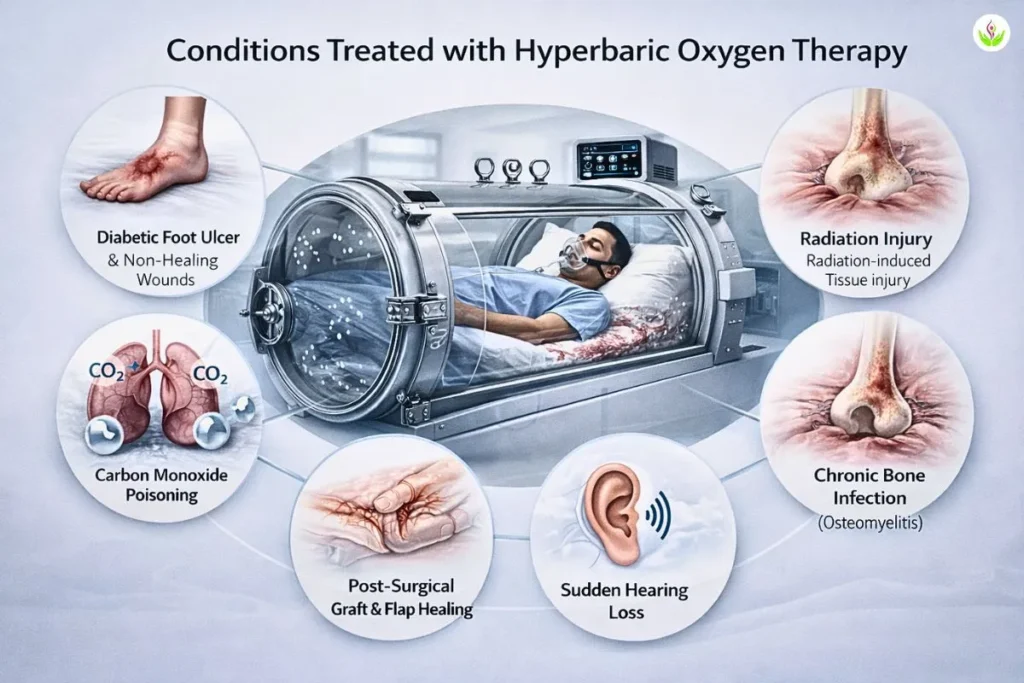
When I recommend Hyperbaric Oxygen Therapy (HBOT), it is always for a specific medical reason.
Doctors do not recommend this treatment for everyone; they prescribe it only when a lack of oxygen slows or blocks the body’s natural healing.
Some of the clinically accepted and internationally recognised indications include:
- Diabetic foot ulcers and chronic non-healing wounds – HBOT improves oxygen delivery to tissues where blood flow is poor, helping ulcers close faster.
- Radiation-induced tissue injury – after radiotherapy, oxygen helps reverse long-term damage to skin, bone, and soft tissue.
- Carbon monoxide poisoning – HBOT rapidly removes carbon monoxide from the blood and restores oxygen to vital organs.
- Chronic bone or soft-tissue infections (osteomyelitis) – high oxygen levels support antibiotic action and immune function.
- Post-surgical grafts or flaps – improves oxygen supply to transplanted tissue, reducing failure risk.
- Sudden sensorineural hearing loss – used early to improve recovery in selected patients.
In every case, HBOT acts as an adjunct therapy—it supports conventional medical or surgical treatment, rather than replacing it.
A proper diagnosis, imaging, and doctor supervision are always essential before beginning any course of HBOT.
For a complete list of all recognised and research-supported indications, you can explore the Comprehensive Guide on Hyperbaric Oxygen Therapy.
HBOT is prescribed for well-defined medical conditions where a shortage of oxygen delays healing, and it works best as a supportive therapy under medical supervision.
Who Can Benefit from HBOT?
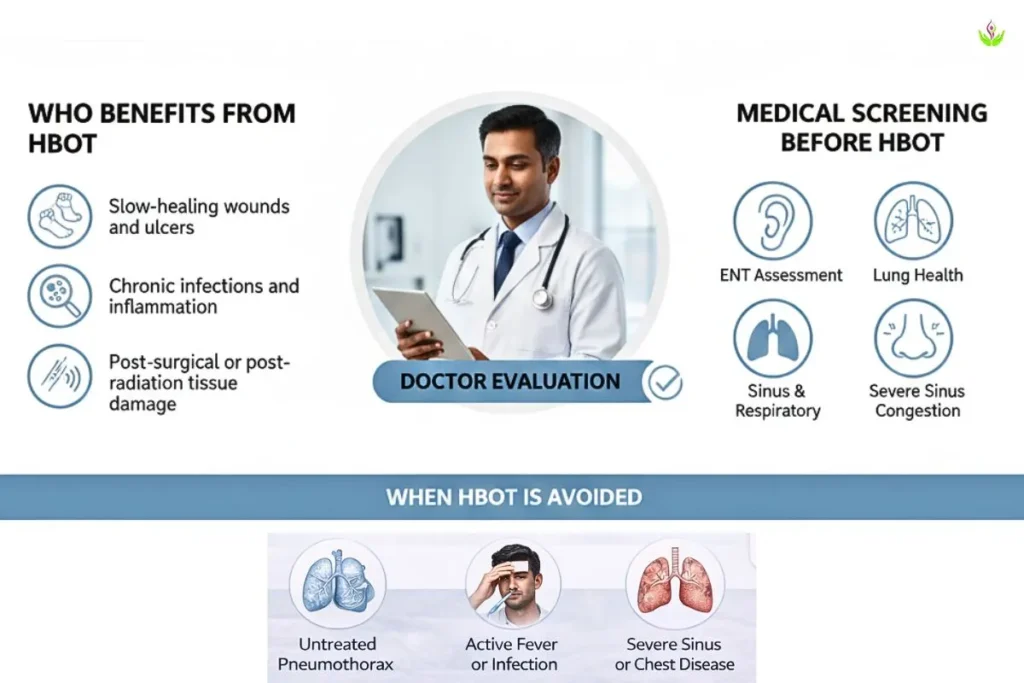
In my clinical practice, I usually recommend Hyperbaric Oxygen Therapy (HBOT) for patients whose tissues are struggling to heal because of poor oxygen supply. It is most useful for individuals with slow-healing wounds, chronic infections, inflammation, or tissue damage following surgery or radiation. HBOT gives these tissues the extra oxygen they need to repair, recover, and function normally again.
However, before starting any HBOT programme, every patient must undergo a medical screening. This ensures that the therapy is both safe and appropriate for the individual’s health condition.
I always evaluate the following points before approval:
- ENT assessment: to make sure the ears and sinuses can equalise pressure safely.
- Lung health: to rule out any collapsed lung (pneumothorax) or underlying lung disease.
- Sinus or respiratory conditions: to identify blockage or infection that may worsen under pressure.
There are also situations where HBOT should be avoided or postponed, such as:
- Untreated pneumothorax (collapsed lung)
- Uncontrolled high fever or active respiratory infection
- Certain chest diseases or severe sinus congestion
These precautions are important because HBOT, while safe, still involves exposure to increased air pressure. Proper screening helps prevent discomfort or complications and ensures that therapy remains truly beneficial.
A physician screens every patient carefully before HBOT to confirm that it is medically safe, appropriate, and likely to support healing effectively.
What Happens During an HBOT Session?
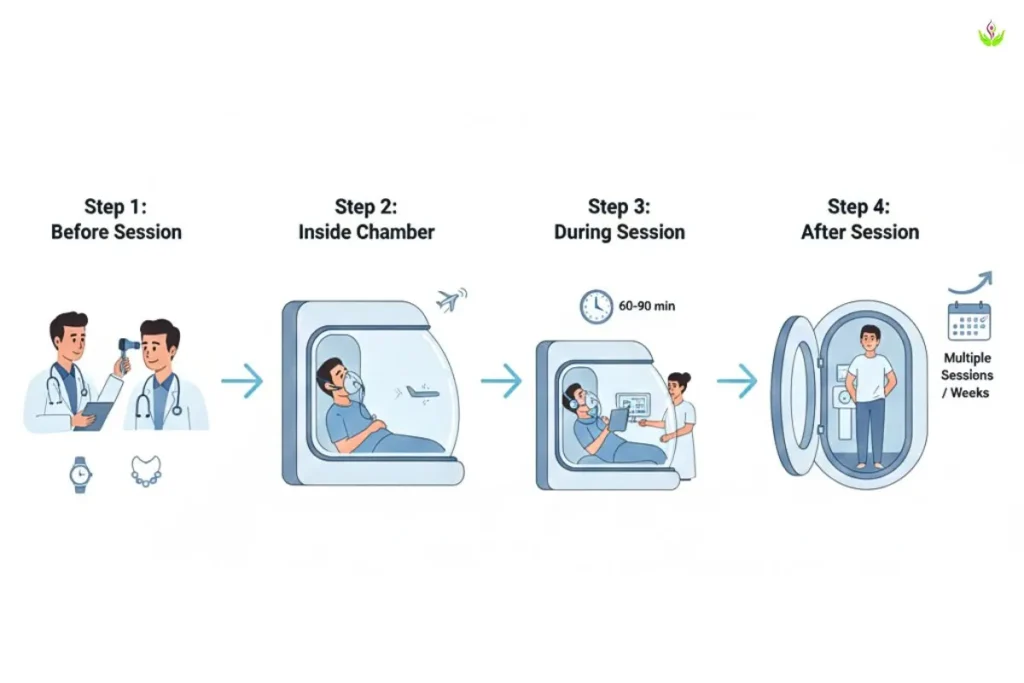
Many of my patients feel curious or even a little anxious before their first Hyperbaric Oxygen Therapy (HBOT) session. Understanding the process in advance often helps them feel completely at ease. Let me describe what typically happens, step by step.
Before the Session
- You undergo a quick pre-treatment check, including vital signs and ear examination.
- I ensure your sinuses are clear and that you are comfortable breathing normally.
- You are asked to remove jewellery, watches, or electronic devices for safety.
Inside the Chamber
- You then lie or sit inside a sealed hyperbaric chamber, which may look like a clear capsule or a small cabin.
- The chamber is slowly pressurised, usually to two or three times normal atmospheric pressure.
- As the pressure increases, you may feel a slight fullness in your ears, much like when an aircraft takes off.
- Breathing remains natural; you simply inhale pure medical oxygen through a mask or hood system.
During the Session
- Most patients relax, read, or listen to music.
- The environment remains calm and temperature-controlled, while medical staff observe you through clear glass.
- Sessions generally last 60 to 90 minutes, depending on your treatment plan.
After the Session
- The pressure is gradually reduced (decompression) so that your body returns gently to normal conditions.
- Once outside, most patients feel relaxed and comfortable, with no downtime required.
- A complete treatment course may include 10 to 40 sessions, depending on the condition and individual response.
HBOT is designed to be peaceful, closely supervised, and free of discomfort.
You simply breathe oxygen while your body begins the slow and steady process of healing from within.
A calm, medically monitored experience where patients rest inside a pressurised chamber, breathe pure oxygen, and allow natural healing to begin gradually.
How Safe Is Hyperbaric Oxygen Therapy?
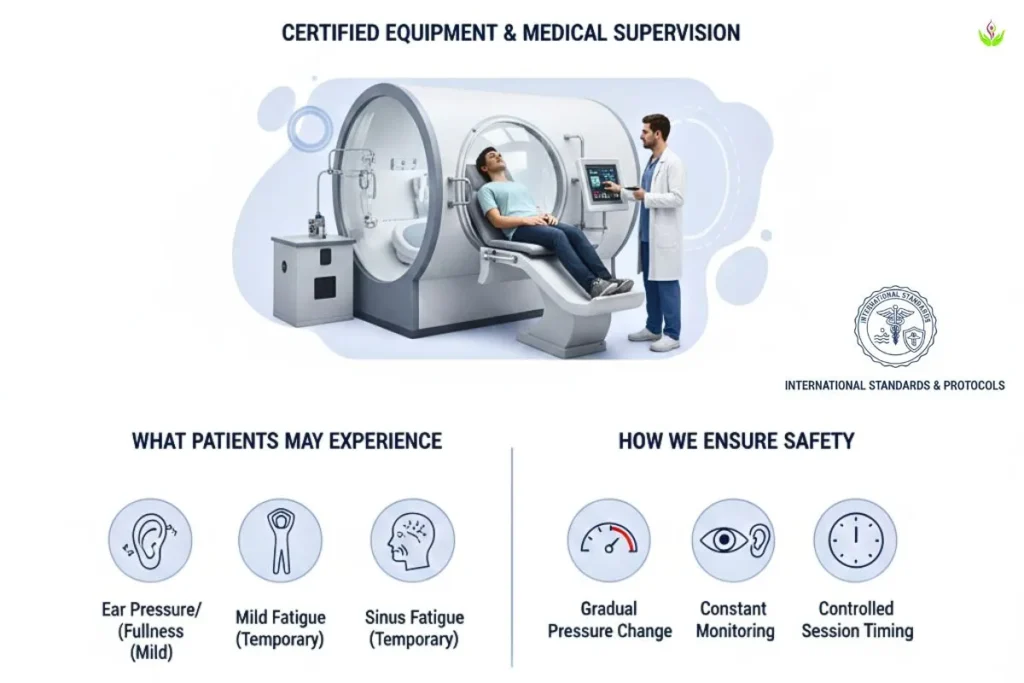
Safety is always my first concern before recommending any medical treatment, and I can reassure you that Hyperbaric Oxygen Therapy (HBOT) is generally very safe when performed under trained medical supervision.
Medical staff conduct the procedure in certified hyperbaric chambers and continuously monitor and control them through precise pressure adjustments.
What Patients Commonly Experience
Most people tolerate HBOT very well.
A few temporary and mild effects may occur during or after the session, such as:
- A feeling of fullness or pressure in the ears (similar to flying in an airplane)
- Mild fatigue or light-headedness immediately after treatment
- Occasionally, sinus pressure or slight popping sounds in the ears as pressure changes
These sensations are normal and usually resolve quickly once the session ends.
How We Ensure Safety
- Technicians gradually increase and decrease the pressure inside the chamber to help the body adapt smoothly.
- Trained staff monitor each session and maintain constant visual and audio communication with the patient.
- Medical staff strictly control oxygen levels and treatment duration according to international HBOT safety standards.
Certified medical professionals rarely encounter serious complications when they administer HBOT responsibly.
In my experience, when conducted properly, HBOT remains one of the safest supportive therapies in modern wound care and rehabilitation medicine. At our centre, we follow UHMS-approved safety protocols and Indian ICMR guidelines for clinical HBOT use to ensure that every session meets international medical standards.
When conducted in certified medical centres under trained supervision, HBOT is among the safest supportive medical procedures, with only mild and temporary side effects.
When Do Results Appear?
One of the most common questions my patients ask is, “Doctor, when will I start seeing the results?”
The truth is that Hyperbaric Oxygen Therapy (HBOT) works gradually. It enhances your body’s natural healing rather than forcing quick change, so patience and consistency are very important.
Most patients begin to notice subtle improvements within the first few sessions — usually after five to ten sittings. These early signs often include a sense of comfort, lightness, or better energy levels as oxygen circulation improves in the tissues.
For chronic wounds or radiation-related injuries, visible changes generally appear within two to four weeks of regular therapy. Wounds may start to look cleaner, swelling may reduce, and skin colour often becomes healthier as oxygen supply increases.
The pace of improvement varies depending on:
- The type and severity of the medical condition
- The body’s ability to respond to oxygen
- Regularity of sessions and adherence to other prescribed treatments such as dressing, antibiotics, or physiotherapy
HBOT outcomes build slowly over time — each session adds to the previous one, allowing oxygen to restore normal healing functions layer by layer.
HBOT results are gradual and cumulative. Early comfort may appear after a few sessions, while visible healing typically develops within weeks — consistency is key to lasting results.
Why Oxygen Delivery Is Key to Healing
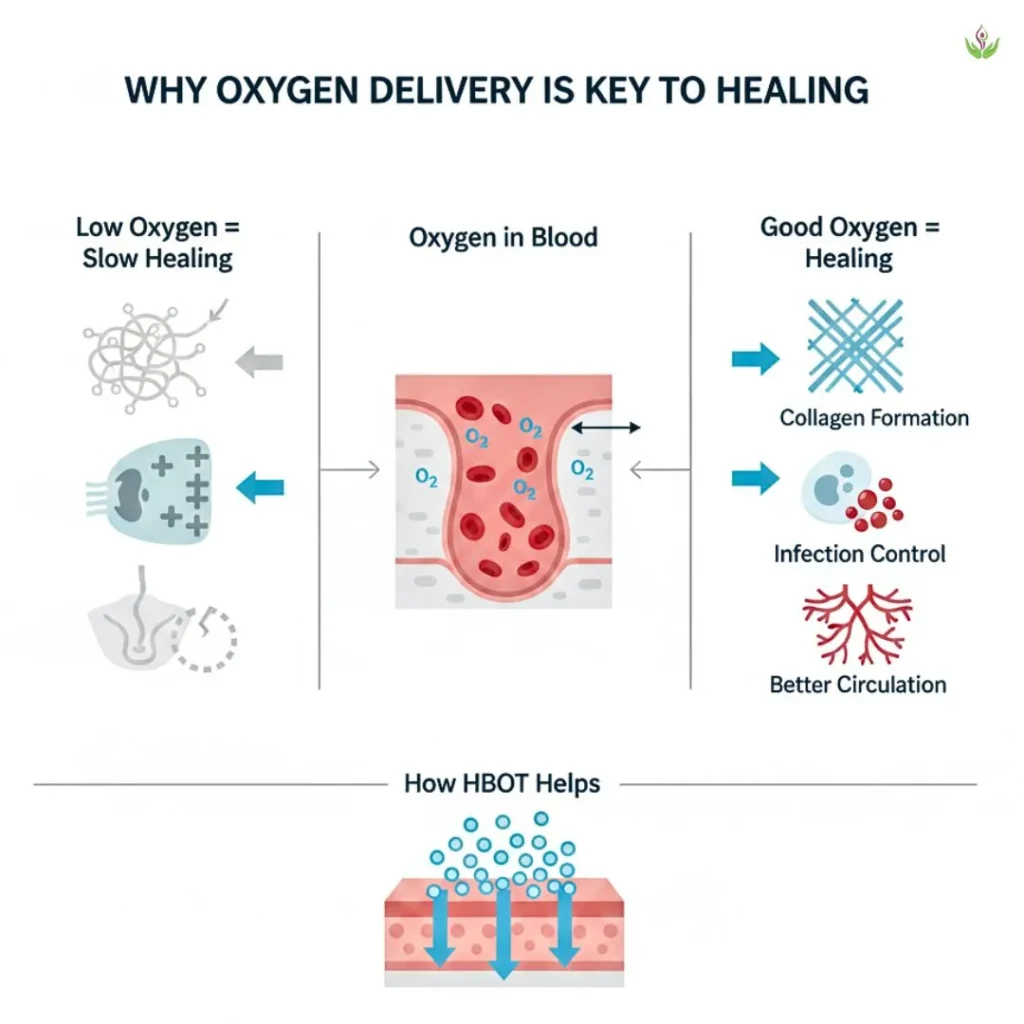
Over the years, I have realised that no medicine can replace what oxygen naturally does for the human body.
Every tissue, every cell, and every healing process depends on oxygen to function properly. When poor circulation, swelling, or tissue damage limits oxygen delivery, the healing process slows dramatically.
This is exactly where Hyperbaric Oxygen Therapy (HBOT) becomes valuable.
Oxygen plays several vital roles in recovery:
- It stimulates collagen production, which helps wounds close and skin rebuild.
- It supports the immune system by enabling white blood cells to fight infection effectively.
- It increases microcirculation and allows blood to reach areas that previously lacked oxygen.
- It reduces inflammation and helps remove toxins and waste from damaged tissues.
During HBOT, the increased oxygen under pressure ensures that even the most deprived tissues receive the supply they need.
This creates the right biological environment for the body to repair itself naturally and consistently.
In simple terms, oxygen acts as the body’s own healing medicine, and HBOT delivers it directly to the areas that need it most.
For a deeper medical explanation of this process, you can read our related article:
👉 Why Oxygen Delivery Matters for Healing
Oxygen is the body’s natural medicine. HBOT makes sure that every cell receives it efficiently, supporting faster tissue repair and stronger immunity.
HBOT Explained in Simple Medical Terms
When I explain Hyperbaric Oxygen Therapy (HBOT) to my patients, I often say, “It is simply oxygen, but given to your body in a way that nature cannot do on its own.”
Inside a hyperbaric chamber, technicians increase the air pressure to about two or three times higher than what we normally breathe. You inhale 100% medical oxygen, and this combination of oxygen and pressure allows it to dissolve deeply into your blood plasma — not just the red cells.
This extra oxygen penetrates and nourishes tissues that previously lacked it, especially in wounds, post-surgical areas, and after radiation injury. Once oxygen reaches these weak spots, the body’s healing processes — cell repair, infection control, and collagen formation — begin to work much more effectively.
In simple terms:
- The chamber provides pressure.
- Oxygen provides fuel for healing.
- Together, they create an environment where the body can repair and recover faster.
If you wish to understand this in even more approachable language, you can read the related explainer:
👉 HBOT Explained in Simple Medical Terms
HBOT simply means giving your body more oxygen than nature allows — safely, medically, and under supervision — so healing can happen where it was previously delayed.
HBOT vs Regular Oxygen Therapy
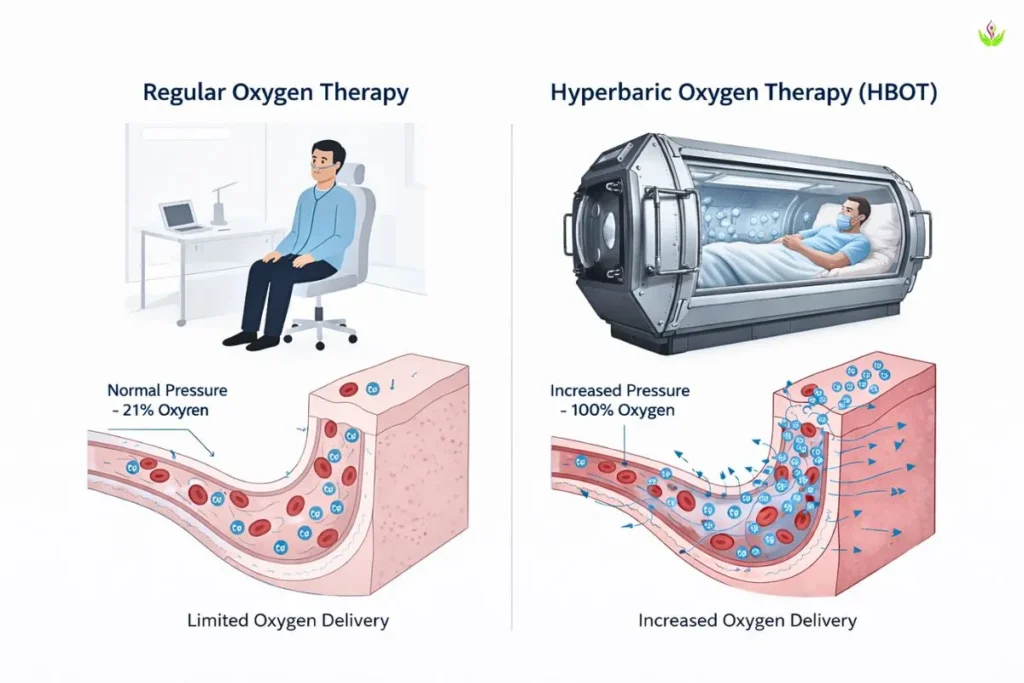
Many patients ask me, “Doctor, what is the difference between the oxygen I get through a mask and what happens inside the hyperbaric chamber?”
The difference lies in both concentration and pressure.
When you breathe normally or receive oxygen through a nasal mask, the air contains about 21 percent oxygen at standard atmospheric pressure. In Hyperbaric Oxygen Therapy (HBOT), you breathe 100 percent medical-grade oxygen in a chamber where the pressure is two to three times higher than normal.
This increased pressure forces oxygen to dissolve directly into the blood plasma and body fluids, not only into red blood cells. That means oxygen can now reach hypoxic tissues — areas with poor circulation or chronic inflammation — where ordinary oxygen cannot go.
In simple words, HBOT multiplies oxygen therapy through pressure and delivers oxygen deeper and in greater quantity, helping tissues recover where healing has slowed.
HBOT is oxygen therapy multiplied by pressure—scientifically designed for deeper healing and recovery of oxygen-deprived tissues.
HBOT Cost and Availability in Delhi
In Delhi, Hyperbaric Oxygen Therapy is now accessible in a growing number of certified medical facilities.
At my centre, I often inform patients that the treatment is medically supervised and reasonably priced, and they feel relieved to hear it.
- Average cost per session: ₹ 4,000 – ₹ 7,000, depending on chamber type and medical indication.
- Treatment course: Usually 10 – 40 sessions, based on condition and response.
- Package variation: Costs may differ for post-surgery recovery, diabetic wounds, or radiation injury.
At Care Well Medical Centre, Delhi, physicians directly supervise each HBOT session and use certified multi-place or monoplace chambers that follow international safety protocols.
Before starting therapy, every patient undergoes a medical evaluation to confirm suitability and safety. Choosing a certified facility is the best way to ensure both comfort and results.
Delhi offers accessible, medically supervised HBOT facilities. For best results and safety, always choose accredited centres such as Care Well Medical Centre. To learn more about the procedure, safety standards, and booking options for HBOT in Delhi, you can visit our detailed page on Hyperbaric Oxygen Therapy at Care Well Medical Centre
My Clinical Perspective – Dr. Sandeep Bhasin
In my years of practice, I have used Hyperbaric Oxygen Therapy (HBOT) for many patients with chronic wounds, radiation injury, burns, and post-surgical recovery. When selected carefully, HBOT consistently supports healing and comfort.
I often see HBOT combined with proper wound care and other treatments help diabetic ulcers close faster, improve graft survival, and reduce swelling.
It is not a miracle therapy — it simply gives oxygen a better chance to do what the body already knows: heal.
Before starting, every patient undergoes a thorough medical assessment to ensure the therapy is safe and suitable. HBOT always works best as part of a complete care plan involving medication, nutrition, and follow-up.
In my clinical practice, HBOT consistently supports healing and recovery when used judiciously, safely, and alongside comprehensive medical care.
Key Takeaways about Hyperbaric Oxygen Therapy
Hyperbaric Oxygen Therapy (HBOT) is a gentle yet powerful medical approach that strengthens the body’s own ability to heal. By delivering oxygen under controlled pressure, it restores supply to oxygen-deprived tissues and supports recovery in chronic wounds, post-surgical repair, and radiation-related injury.
When used responsibly and under medical supervision, HBOT remains one of the safest and most effective supportive treatments—helping patients regain comfort, strength, and confidence through steady, natural healing.
FAQs about Hyperbaric Oxygen Therapy (HBOT)
Hyperbaric Oxygen Therapy (HBOT) is a medical treatment where you sit or lie inside a special pressurised chamber and breathe 100 percent oxygen. The higher pressure pushes more oxygen into your bloodstream, helping your tissues heal faster and your body recover when oxygen supply is limited.
A typical HBOT session lasts 60–90 minutes. The total number of sessions depends on your medical condition and response to treatment. Your doctor will customise the schedule for safe and gradual improvement.
No, HBOT is completely painless and non-invasive. You may feel mild ear fullness, similar to what happens during an airplane take-off, which settles quickly once pressure equalises. Most patients find the experience calm and relaxing.
Most patients require 10–40 sessions of Hyperbaric Oxygen Therapy, depending on the type and severity of the condition. Chronic wounds, radiation injuries, or delayed healing may require a longer course for best results.
In Delhi, Hyperbaric Oxygen Therapy generally costs between ₹ 4,000 and ₹ 7,000 per session, depending on the facility, duration, and clinical purpose. Trained medical professionals at Care Well Medical Centre conduct each HBOT session to ensure safety and consistent outcomes.
References and Medical Disclaimer
References:
- Undersea and Hyperbaric Medical Society (UHMS). Hyperbaric Oxygen Therapy Indications, 15th Edition. North Palm Beach, FL: UHMS; 2023. Available from: https://www.uhms.org/
- Cleveland Clinic. Hyperbaric Oxygen Therapy (HBOT): Procedure, Benefits & Risks. 2024. Available from:https://my.clevelandclinic.org/health/treatments/17811-hyperbaric-oxygen-therapy
- Ortega MA, Fraile-Martinez O, García-Montero C, et al. The therapeutic potential of hyperbaric oxygen therapy in human medicine: Current evidence and future perspectives. Int J Mol Sci. 2021;22(12):6381. doi:10.3390/ijms22126381
- Kranke P, Bennett MH, Martyn-St James M, et al. Hyperbaric oxygen therapy for chronic wounds. Cochrane Database Syst Rev. 2015;(6):CD004123. doi:10.1002/14651858.CD004123.pub4
- Thom SR. Hyperbaric oxygen: Its mechanisms and efficacy. Plast Reconstr Surg. 2011;127(Suppl 1):131S–141S. doi:10.1097/PRS.0b013e3181fbe2bf
- Weaver LK, Hopkins RO, Chan KJ, et al. Hyperbaric oxygen for acute carbon monoxide poisoning. N Engl J Med. 2002;347(14):1057–1067. doi:10.1056/NEJMoa013121
- Indian Council of Medical Research (ICMR). Evidence-Based Guidelines for Management of Diabetic Foot Ulcers. New Delhi: ICMR; 2023. Available from:https://www.icmr.gov.in/
Medical Disclaimer:
This article is for patient education and general medical awareness only. It is not a substitute for professional diagnosis or treatment. Only a qualified physician should evaluate and supervise Hyperbaric Oxygen Therapy (HBOT) before starting the treatment.