 By
ByA hair transplant does not end when the surgeon places the final graft.
In many ways, that is when healing begins.
During the first few days, thousands of newly transplanted follicles need a healthy environment. Your scalp also needs to recover from tiny extraction and implantation sites.
Oxygen plays an important role in this process.
This is why HBOT for hair transplant recovery has gained interest among surgeons and patients. Hyperbaric Oxygen Therapy increases oxygen availability in the body and may support tissue repair.
HBOT also has a more established role in selected difficult wounds and compromised skin grafts.
However, does every hair transplant patient need it? Can it actually improve graft survival? And can it make your skin heal faster?
Let us understand what the current evidence tells us.
What Is HBOT and Why Is Oxygen Important After a Hair Transplant?
HBOT stands for Hyperbaric Oxygen Therapy.
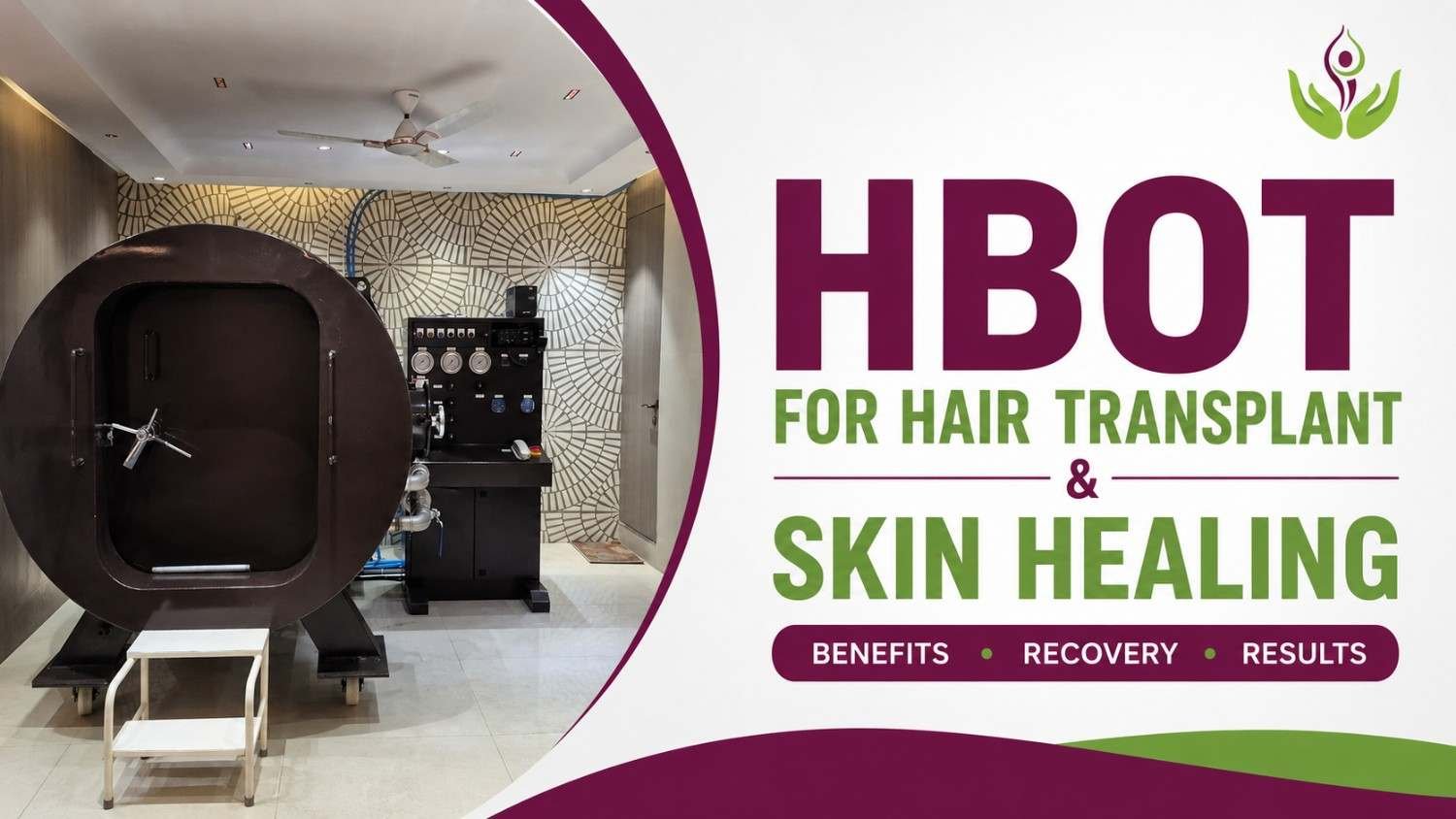
During treatment, you breathe medical-grade oxygen inside a specially designed pressurised chamber. The increased pressure allows more oxygen to dissolve in your blood plasma.
Your circulation then carries this oxygen throughout the body.
This matters because healing tissues have increased oxygen needs.
After a hair transplant, your scalp begins repairing thousands of tiny wounds. The transplanted follicles also need to establish themselves within their new location.
Oxygen supports several processes involved in wound healing, including collagen formation, new blood vessel development, and tissue repair.
Therefore, doctors are exploring whether HBOT can create a more favourable healing environment after hair transplantation.
It is important, however, to separate this biological rationale from guaranteed clinical results.
HBOT may support recovery. It cannot compensate for poor graft handling, incorrect implantation, infection, or inadequate post-transplant care.
What Happens to Your Scalp After Hair Transplant Surgery?
Understanding the healing process makes the role of HBOT easier to understand.
During an FUE hair transplant, the surgeon extracts individual follicular units from the donor area. The team then prepares and implants these grafts into tiny recipient sites.
Your scalp therefore has two areas that need healing.
The donor area contains many small extraction sites.
Meanwhile, the recipient area contains newly implanted follicles surrounded by tiny wounds.
During the early recovery period, you may notice:
- Mild swelling
- Redness
- Tenderness
- Crust formation
- Temporary itching
- Small scabs around grafts
These changes usually form part of normal healing.
The body immediately starts repairing the affected skin. Blood vessels, inflammatory cells, fibroblasts, collagen, and growth factors all participate.
Adequate oxygen supports many of these processes.
How HBOT Help After a Hair Transplant?
The possible benefits of HBOT after hair transplantation mainly come from improved tissue oxygenation.
When you breathe oxygen under increased pressure, more oxygen dissolves into your plasma. This may help oxygen reach healing tissue more effectively.
A recent study examining HBOT after hair transplantation reported high graft integration, rapid postoperative recovery, and high patient satisfaction. However, the researchers also stressed that larger controlled studies are necessary.
Therefore, we should consider HBOT a promising supportive therapy, rather than a guaranteed method for improving every hair transplant result.
Support Early Graft Healing
The first few days after hair transplantation are important.
Newly implanted follicles initially depend on their surrounding environment before establishing a more stable blood supply.
Improved tissue oxygen availability may support this early healing phase.
However, graft survival still depends heavily on surgical technique, graft handling, implantation depth, hydration, and post-operative care.
Support Scalp Recovery
The donor and recipient areas experience controlled surgical trauma.
HBOT may provide additional oxygen to these healing tissues. This can support cellular repair and wound recovery.
Some patients may therefore find HBOT useful as part of a carefully planned postoperative programme.
Help Manage Swelling
Mild forehead and scalp swelling can occur after hair transplantation.
HBOT has physiological effects that may help control tissue oedema in certain clinical settings.
However, standard measures remain important. These include correct sleeping position, prescribed medicines, hydration, and following your surgeon’s instructions.
Support New Blood Vessel Formation
New blood vessel development is called angiogenesis.
This process matters during wound healing because recovering tissues need a reliable supply of oxygen and nutrients.
HBOT can influence pathways involved in angiogenesis and tissue repair.
For a hair transplant patient, this creates an interesting biological rationale for postoperative HBOT.
However, more hair-transplant-specific research is still required.
Does HBOT Increase Hair Graft Survival?
This is probably the most important question for anyone considering HBOT after hair transplantation.
The answer needs some context.
Early clinical research suggests that HBOT may support postoperative recovery and graft integration after hair transplantation.
However, current evidence does not allow us to promise that HBOT will increase every patient’s graft survival rate.
Many factors influence graft survival:
- Surgeon experience
- Graft extraction technique
- Time outside the body
- Graft hydration
- Temperature control
- Implantation technique
- Recipient-site preparation
- Smoking
- Scalp circulation
- Infection
- Aftercare
Think of HBOT as something that may improve the healing environment.
It does not replace good surgery.
Can HBOT Make Hair Grow Faster?
HBOT should not be confused with a direct hair-growth treatment.
After transplantation, the implanted follicles normally pass through different stages.
Some transplanted hairs may shed during the first few weeks. This can worry patients, but it often forms part of the expected hair transplant cycle.
New growth usually develops gradually over the following months.
HBOT may support early wound healing, but we currently do not have strong evidence that it dramatically accelerates the normal hair growth cycle.
Therefore, patients should maintain realistic expectations.
Your surgeon may recommend other treatments when appropriate, including medicines or regenerative therapies, depending on your type of hair loss.
How Does HBOT Support Skin Healing?
The connection between HBOT and skin healing extends far beyond hair transplantation.
Researchers have studied HBOT in chronic wounds, reconstructive surgery, compromised skin grafts, and poorly oxygenated tissues.
Healing skin requires oxygen for several important processes.
Collagen Formation
Collagen gives healing tissue strength and structure.
Fibroblasts produce collagen during wound repair. Adequate oxygen helps these cells function properly.
Therefore, increasing tissue oxygen may support collagen production in wounds where oxygen supply is inadequate.
Formation of New Blood Vessels
Healing tissue needs circulation.
HBOT can stimulate biological pathways involved in angiogenesis. New capillaries can improve the long-term delivery of oxygen and nutrients to recovering tissues.
Support for Infection Control
Your immune cells also need oxygen.
Certain white blood cells use oxygen-dependent mechanisms to destroy bacteria.
HBOT does not replace antibiotics. However, in selected infections and difficult wounds, increased oxygen may support the body’s defence mechanisms.
Better Healing in Low-Oxygen Tissue
Some wounds remain stuck in a poorly healing state because the tissue does not receive enough oxygen.
This problem commonly occurs with diabetes, vascular problems, radiation damage, or compromised grafts.
HBOT may have greater value in these situations than in healthy skin already receiving adequate blood flow.
Can HBOT Help Skin Grafts and Flaps?
This is where the distinction between routine healing and compromised healing becomes particularly important.
HBOT is not routinely recommended simply to support a normal, healthy graft or flap.
However, the Undersea and Hyperbaric Medical Society recognises HBOT for compromised grafts and flaps where reduced blood flow or tissue hypoxia threatens survival.
HBOT may help increase oxygen availability while new circulation develops.
Recent research has also strengthened this area. Studies of skin flap transplantation and skin grafting have reported improvements in graft survival or uptake and postoperative tissue recovery when HBOT was used in selected patients.
For patients undergoing reconstructive or plastic surgery, this means HBOT may become particularly valuable when the surgeon notices signs of compromised tissue.
What Signs Suggest That Skin Healing May Be Compromised?
Most redness and swelling after surgery are normal.
However, certain changes deserve prompt medical attention.
Contact your surgeon if you notice:
- Increasing rather than improving pain
- Spreading redness
- Unusual darkening or paleness of the skin
- Foul-smelling discharge
- Persistent bleeding
- Increasing swelling
- Fever
- Wound separation
- Tissue that feels unusually cold
- Signs of infection
Do not simply book HBOT yourself if you notice these symptoms.
Your surgeon must first determine why the tissue is struggling.
Sometimes the problem requires antibiotics, drainage, wound cleaning, vascular treatment, or urgent surgery.
HBOT may then support the main treatment when clinically appropriate.
Who May Benefit Most From HBOT After Hair Transplant?
Every hair transplant patient does not require Hyperbaric Oxygen Therapy.
A healthy person with good scalp circulation and uncomplicated surgery may heal perfectly well without it.
Your surgeon may consider HBOT more strongly when you have factors that could affect recovery.
These may include:
- Delayed wound healing
- Compromised scalp circulation
- Significant tissue swelling
- Previous scalp surgery
- Scarred recipient tissue
- Selected reconstructive procedures
- Healing concerns identified by your surgeon
Smoking can also reduce tissue oxygenation and negatively affect healing. Stopping smoking around surgery remains far more important than relying on HBOT to compensate for its effects.
Your surgeon should decide whether the expected benefit justifies additional treatment.
Read More:- HBOT Therapy in Delhi: Benefits, Cost, Procedure and Complete Guide
What Can You Expect During an HBOT Session?
If your doctor recommends HBOT, the treatment itself is generally straightforward.
Before entering the chamber, the medical team reviews your health and medications.
You may need to remove electronic devices, watches, jewellery, oils, perfumes, and other prohibited products.
Once you enter the chamber, pressure increases gradually.
You may feel fullness in your ears, similar to what happens during an aircraft take-off.
Swallowing or yawning usually helps equalise this pressure.
You then relax and breathe oxygen according to the prescribed protocol.
After treatment, the chamber gradually returns to normal atmospheric pressure.
Most people can continue their normal daily activities afterward unless their surgeon advises otherwise.
When Should HBOT Start After a Hair Transplant?
There is currently no universally accepted HBOT schedule for routine hair transplantation.
Timing should therefore depend on your surgeon’s assessment and the protocol used by the treating hyperbaric physician.
Some postoperative programmes start treatment relatively early because the first phase of graft healing occurs soon after transplantation.
However, you should not copy another patient’s treatment schedule.
Your surgeon should decide:
- Whether you need HBOT
- When treatment should begin
- How many sessions you require
- What chamber pressure is appropriate
- When treatment should stop
Personalised treatment is more sensible than purchasing a fixed package.
How Many HBOT Sessions Are Needed After Hair Transplant?
There is no scientifically established number that works for every hair transplant patient.
Your requirements may depend on:
- Size of your transplant
- Condition of the donor area
- Recipient scalp quality
- Healing response
- Medical history
- Reason for using HBOT
Someone receiving HBOT because of compromised tissue may require a very different protocol from someone using it as elective recovery support.
Your doctor should reassess your scalp rather than deciding the entire course solely by session number.
Is HBOT Safe After Hair Transplantation?
HBOT is generally considered safe when trained professionals select and monitor patients appropriately.
However, it is still a medical treatment.
Temporary ear pressure is among the most common complaints.
Other possible effects include:
- Sinus discomfort
- Temporary vision changes after repeated treatments
- Fatigue
- Claustrophobia
- Temporary blood sugar changes in diabetic patients.
Rare complications can include oxygen-related seizures or pressure-related lung injury.
Therefore, medical screening before HBOT remains important.
Who Should Be Careful With HBOT?
Tell your doctor about your complete medical history before starting treatment.
You may require additional assessment if you have:
- Lung disease
- Previous pneumothorax
- Blocked ears
- Sinus infection
- Fever or respiratory infection
- Seizure disorder
- Diabetes
- Pregnancy
- Implanted medical devices
- Severe claustrophobia
- Certain medications
Untreated pneumothorax is an important contraindication to HBOT.
Never hide a health condition because you want to start treatment quickly.
What Results Should You Realistically Expect?
This is where patient expectations matter.
HBOT may create a more supportive healing environment. It may help tissue oxygenation and recovery in appropriately selected patients.
However, you should not expect HBOT to guarantee:
- 100% graft survival
- Zero swelling
- Immediate healing
- Faster hair growth in every patient
- Prevention of normal shedding
- Complete prevention of complications
Hair transplantation remains a surgical procedure.
The skill of your surgeon, graft quality, scalp condition, and post-operative care remain central to your final result.
HBOT should complement these factors rather than replace them.
How Can You Improve Hair Transplant Healing Alongside HBOT?
Your daily habits matter just as much as additional therapies.
After your transplant:
- Follow your surgeon’s washing instructions
- Avoid scratching or rubbing the grafts
- Sleep in the recommended position
- Take prescribed medicines correctly
- Avoid smoking
- Avoid alcohol when advised
- Stay adequately hydrated
- Eat enough protein and micronutrient-rich foods
- Avoid intense exercise until cleared
- Attend your scheduled follow-ups
Do not add supplements, topical medicines, or recovery therapies without discussing them with your surgeon.
Simple aftercare often has a greater impact than complicated recovery protocols.
Why Consider Care Well Medical Centre for Hair Transplant and HBOT in Delhi?
Hair transplantation and postoperative recovery work best when the same clinical team understands the entire treatment journey.
At Care Well Medical Centre, Delhi, Dr. Sandeep Bhasin and the clinical team evaluate the donor area, recipient scalp, hair-loss pattern, medical history, and healing risks before planning treatment.
HBOT may be considered when it can add meaningful value to recovery.
The goal is not to prescribe Hyperbaric Oxygen Therapy to every hair transplant patient.
Instead, the team focuses on:
- Careful hairline planning
- Appropriate donor management
- Gentle graft handling
- Natural graft placement
- Postoperative scalp care
- Monitoring early healing
- Personalised recovery support
When clinically appropriate, HBOT can form one part of this wider recovery strategy.
Conclusion
Hair transplant success depends on more than the number of grafts implanted.
The first few days after surgery create an important healing period. Your scalp needs good circulation, proper wound care, and enough oxygen to repair itself.
HBOT may support this environment by increasing tissue oxygen availability and influencing processes involved in wound healing.
Its role becomes particularly relevant when tissue is poorly oxygenated or a graft or flap becomes compromised.
For routine hair transplantation, however, the evidence remains promising rather than definitive. HBOT should therefore be viewed as a supportive option, not a guaranteed method for improving hair growth or graft survival.
If you are considering HBOT for hair transplant recovery in Delhi, discuss it with a doctor who understands both hair transplantation and Hyperbaric Oxygen Therapy.
At Care Well Medical Centre, Dr. Sandeep Bhasin can evaluate your scalp, surgery, healing pattern, and medical history before deciding whether HBOT may benefit your recovery.
FAQs About HBOT After Hair Transplant
HBOT may support scalp oxygenation and early wound recovery after hair transplantation. Early clinical research is encouraging, but larger controlled studies are still needed. Therefore, HBOT should complement good surgical technique and postoperative care rather than replace them.
HBOT may create a favourable oxygen-rich environment for healing. However, current evidence cannot guarantee improved graft survival for every patient. Surgical technique, graft handling, scalp circulation, and aftercare remain critical.
There is not enough evidence to show that HBOT significantly speeds up the normal hair-growth cycle. Its main potential role after transplantation involves supporting tissue healing and recovery.
No. Most healthy patients can recover normally without HBOT. Your surgeon may consider it when additional healing support appears clinically useful.
HBOT may influence tissue swelling in certain clinical settings. However, patients should continue standard measures recommended by their surgeon for post-transplant swelling.
There is no universal schedule. Your surgeon and hyperbaric physician should decide the timing based on your scalp condition, procedure, and reason for treatment.
There is no fixed number for hair transplantation. The treatment course depends on your healing, medical history, scalp condition, and treatment goal.
HBOT increases tissue oxygen availability and may support wound repair. However, careful extraction technique and proper donor-area aftercare remain the main factors affecting recovery.
HBOT has a recognised role in compromised grafts and flaps where reduced blood flow or hypoxia threatens tissue survival. It is not routinely recommended simply to support a normal, healthy graft.
Some people with diabetes can receive HBOT. However, your medical team should monitor your blood glucose and review your medicines before treatment.
Patients considering HBOT after hair transplantation can undergo medical evaluation at Care Well Medical Centre in Delhi. Dr. Sandeep Bhasin can assess whether HBOT has a suitable role in the individual recovery plan.