 By
By“Doctor, what exactly happens inside that oxygen chamber?”
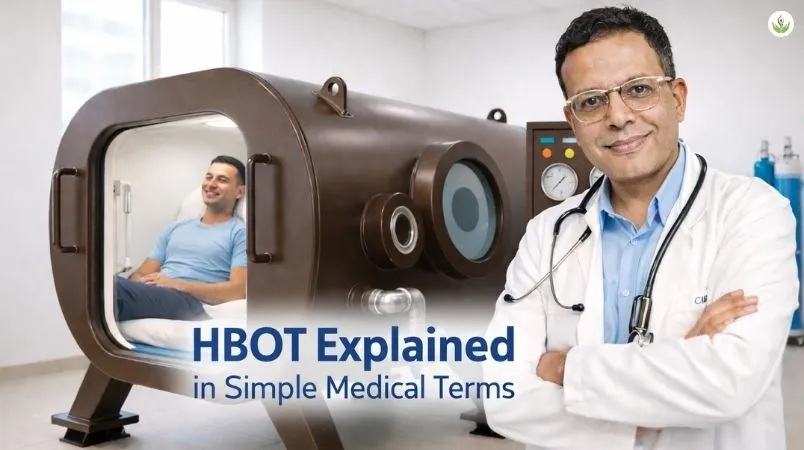
I hear this question often—and I completely understand why. Medical terms like Hyperbaric Oxygen Therapy can sound complex, but once you hear HBOT explained in simple language, it becomes easy to grasp. Let me guide you through it, just as I do with my patients in the consultation room.
Hyperbaric Oxygen Therapy, or HBOT, is oxygen therapy—but delivered to your body in a way that nature alone cannot provide. Inside a specially designed pressurised chamber, the air pressure is gently increased while you breathe 100 percent pure medical oxygen. This controlled pressure allows your lungs and blood plasma to absorb far more oxygen than normal breathing ever could. The result is improved healing, faster recovery, and stronger oxygen delivery to the areas where your body needs it most.
If you wish to explore the detailed medical explanation, you can learn more in our detailed article on What Is Hyperbaric Oxygen Therapy?
The Simple Idea Behind HBOT
Whenever I explain Hyperbaric Oxygen Therapy to a new patient, I begin with a simple truth — oxygen alone heals, but under pressure, it heals deeper and faster.
This is the essence of HBOT explained in simple medical terms. The therapy combines two natural elements — oxygen and pressure — to help your body reach tissues that normal breathing cannot supply adequately.
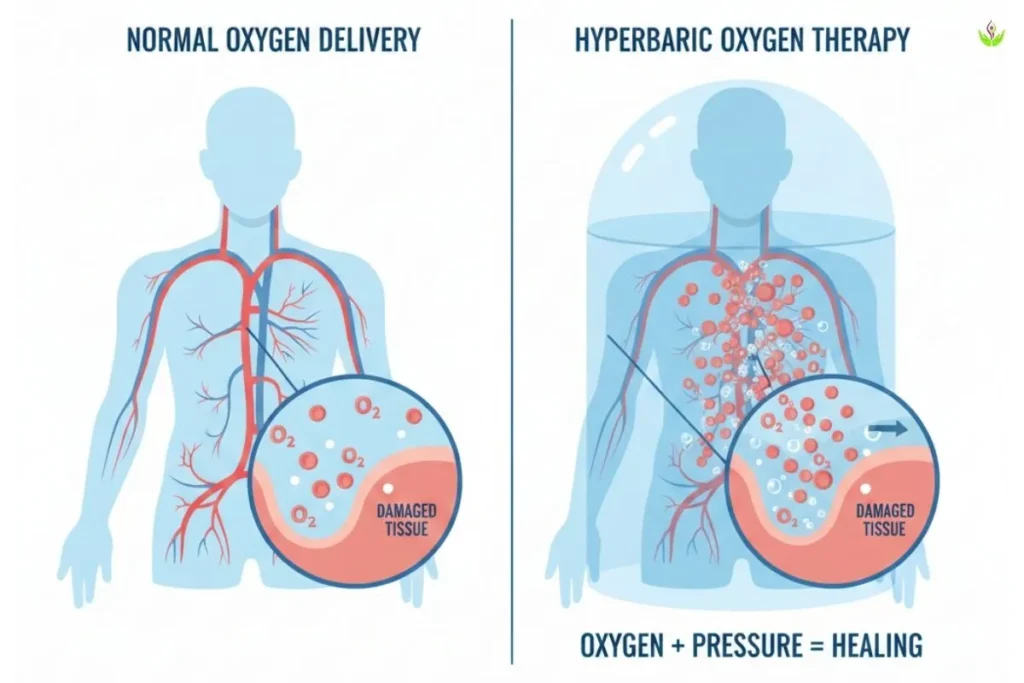
Oxygen + Pressure = Healing
Imagine watering a dry garden. If the water flows gently, it only wets the surface. But when you increase the pressure, that same water travels deep into the soil, nourishing the roots and bringing life back to dry areas.
Your body works in a similar way. Under normal conditions, red blood cells carry oxygen through your bloodstream. But when tissues are swollen or injured, circulation slows and oxygen delivery becomes limited.
Inside the hyperbaric chamber, the surrounding pressure is gently increased while you breathe pure medical oxygen. This pressure allows oxygen to dissolve not only into red blood cells but also into the plasma—the liquid part of your blood—so it can reach areas that were previously oxygen-deprived.
During HBOT, this deeper oxygen delivery helps your body to:
- Close slow-healing or infected wounds faster
- Reduce swelling and inflammation naturally
- Support new blood vessel and tissue formation
- Strengthen your immune response against infection
Because of this simple combination of oxygen and pressure, the body’s own healing processes become faster and more effective—without the need for additional medication.
Why Pressure Changes Everything
The true power of HBOT lies in pressure.
When we increase pressure inside the chamber, oxygen does not remain limited to red blood cells—it dissolves directly into your plasma, lymph, and other body fluids.
This happens because of a basic scientific principle known as Henry’s Law, which simply means: the higher the pressure, the more gas (oxygen) dissolves into liquid (your blood and tissues).
This simple principle is what makes HBOT a scientifically proven medical therapy rather than just a wellness trend.
By enhancing this natural process, HBOT allows oxygen to reach even those regions where blood flow is poor or temporarily blocked—such as chronic wounds, post-surgical areas, or radiation-damaged tissue.
If you wish to understand this difference more clearly, you can read our related article on Oxygen Under Pressure vs Normal Oxygen Therapy, which explains how pressure multiplies oxygen’s healing potential.
🩺 Clinical insight: HBOT does not introduce anything foreign into your body. It simply gives oxygen—the body’s most natural healer—the right environment to do its job more effectively. The chamber provides the pressure; oxygen provides the power.
How HBOT Actually Helps the Body Heal
Many patients ask me, “Doctor, how does this oxygen therapy actually help my body heal?”
Let me explain it the same way I do during a consultation. Once you understand how Hyperbaric Oxygen Therapy (HBOT) works, you will see that it is not a complex or mechanical process — it is simply your body’s natural healing power enhanced by oxygen.
Oxygen as the Body’s Fuel
Every cell in your body runs on oxygen. It is the essential fuel that keeps your tissues alive, active, and able to repair themselves. When oxygen levels drop — due to swelling, poor circulation, or chronic illness — healing slows down.
When your tissues receive too little oxygen, you may notice:
- Slower wound closure and delayed recovery
- Reduced immune response and infection control
- Persistent inflammation and tissue fatigue
- Discomfort or pain in healing areas
During HBOT, you breathe 100 percent medical-grade oxygen at pressures higher than normal. This raises the oxygen concentration in your bloodstream, giving every cell the extra supply it needs to recover.
In simple words, HBOT restores the “fuel” that powers your body’s healing system.
What the Chamber Does
Inside the hyperbaric chamber, you sit or lie comfortably while the air pressure is gently increased — usually to two or three times higher than what we experience in everyday surroundings.
You continue to breathe pure medical oxygen through a mask or hood system.
The experience is calm and natural. Many of my patients describe it as breathing clean mountain air, but at a higher pressure.
This gentle pressurisation allows oxygen to dissolve deeply into your blood plasma and other body fluids, reaching areas that ordinary breathing cannot.
Every session is monitored closely to ensure complete safety and comfort.
What Happens Inside Your Body
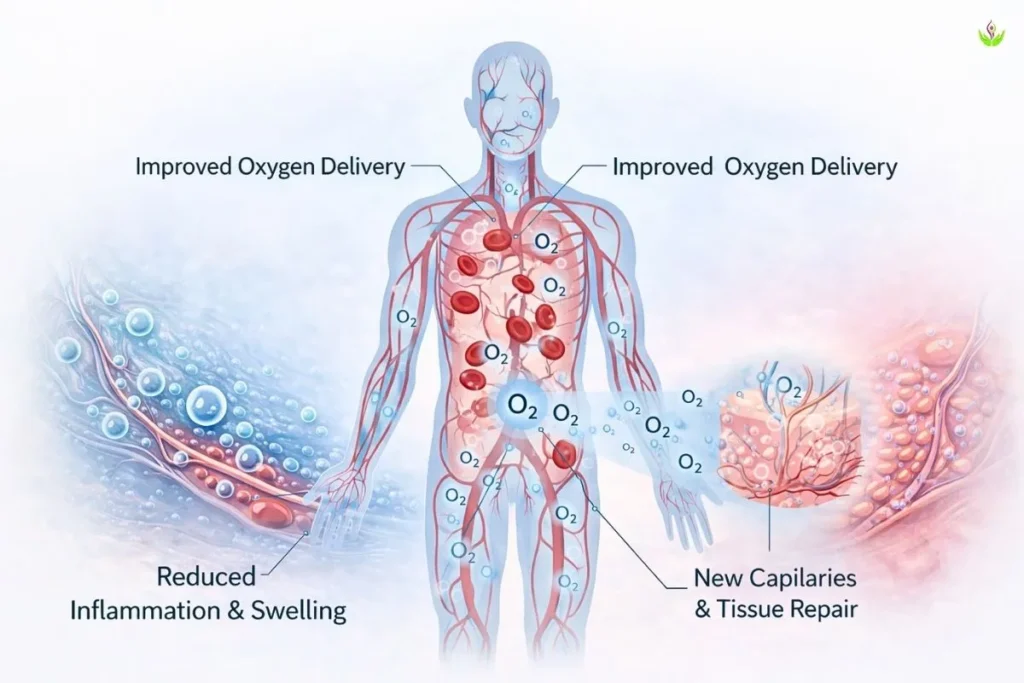
As the surrounding pressure increases, oxygen begins to dissolve not only into your red blood cells but also into your plasma, lymph, and even bone tissue.
This enhanced oxygen flow helps your body to:
- Deliver oxygen to tissues with poor blood supply
- Stimulate new capillary and collagen formation
- Reduce inflammation and swelling naturally
- Strengthen your immune response against infection
- Typical HBOT course: 20–40 sessions over 4–8 weeks, depending on your condition and overall response.
Over time, these effects restore normal tissue function, support repair, and improve overall recovery in a steady, natural way.
For those who wish to understand this process in greater medical detail, I have explained the physiology step by step in How Does Hyperbaric Oxygen Therapy Work?
Doctor’s perspective: When I recommend HBOT, my goal is not to replace your body’s healing — it is to empower it. By combining oxygen and pressure in a safe, controlled way, the therapy simply gives your cells what they already need to repair themselves effectively.
Why Oxygen Delivery Is the Key to Healing
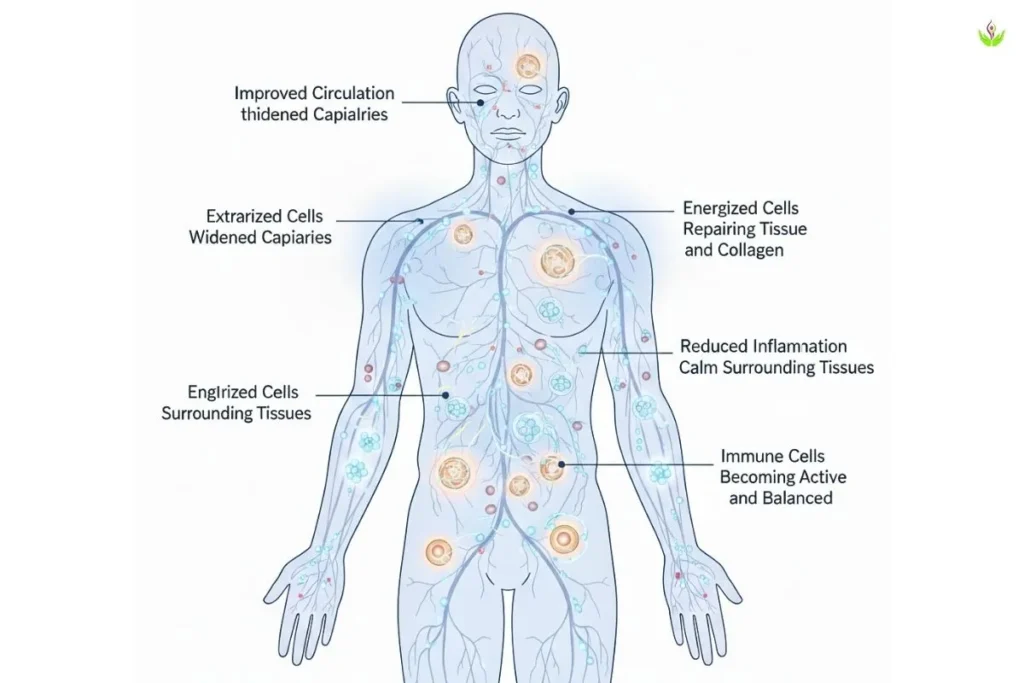
Over the years, I have realised that oxygen is the medicine your body already knows how to use.
It is not an external drug—it is the element that powers every heartbeat, every repair, and every act of recovery.
When oxygen delivery slows, healing weakens; when it flows freely again, the body begins to repair itself with remarkable precision.
Think of Hyperbaric Oxygen Therapy as recharging the body’s natural repair battery.
Inside the chamber, oxygen and pressure work together to open tiny capillaries and carry fresh oxygen deep into tissues that were once dormant or deprived.
Many of my patients describe a quiet sense of warmth and calm after their sessions—often the first sign that oxygen is reaching those silent, struggling cells again.
Improved oxygen delivery supports healing in several vital ways:
- Enhances circulation: widens small blood vessels and restores healthy blood flow
- Stimulates cell repair: energises tissues to rebuild collagen and close wounds faster
- Strengthens immunity: enables white blood cells to fight infection effectively
- Reduces inflammation: eases swelling, stiffness, and pain in damaged tissue
In medical terms, this oxygen enrichment resets your body’s healing rhythm—helping recovery occur more smoothly and completely.
For a deeper look at the science behind this process, you can explore our related article on Why Oxygen Delivery Matters for Healing.
What a Typical HBOT Session Feels Like
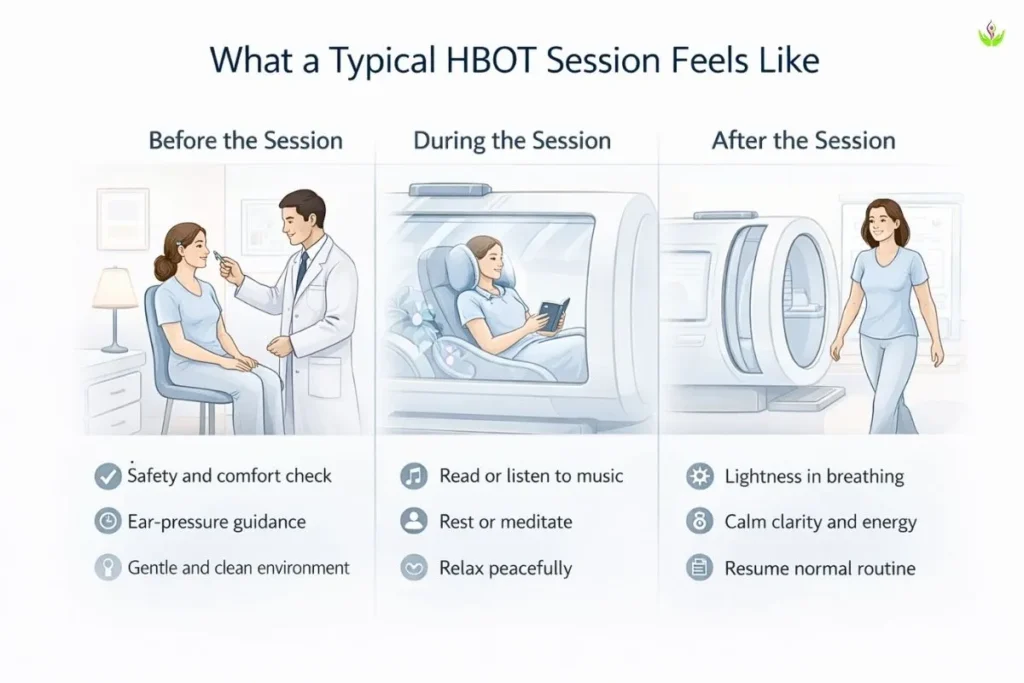
Many of my first-time patients feel slightly anxious before their initial session of Hyperbaric Oxygen Therapy (HBOT).
That is completely natural. The chamber may look unfamiliar, yet the experience itself is gentle, quiet, and deeply relaxing.
Let me take you through it, just as I would in my clinic.
Before the Session
Before we begin, my team and I ensure you are fully comfortable. Your ears and sinuses are checked, and I teach you a simple breathing or swallowing technique to equalise pressure.
You remove jewellery and electronic items, then change into soft cotton clothing.
The environment feels peaceful — softly lit, temperature-controlled, and free from hospital noise.
You may sit or lie down depending on the chamber type.
At this stage, patients often say their initial nervousness begins to fade once they see how calm and organised everything feels.
Before the session, you can expect:
- A short safety and comfort check
- Simple ear-pressure instructions
- Gentle lighting and clean surroundings
- Doctor supervision throughout
During the Session
As the session starts, pressure increases gradually — similar to the feeling of an aircraft taking off. You may notice mild fullness in your ears that disappears as you equalise.
You breathe 100 percent medical oxygen through a soft mask or hood.
The air feels cool and refreshing, almost like breathing clean mountain air.
Many patients choose to:
- Read or listen to soft music
- Rest quietly or meditate
- Simply close their eyes and relax
Inside the chamber, communication remains open.
You can speak with me or the technician at any time.
Most sessions last 60 to 90 minutes, and as oxygen circulates, many people describe a gentle sense of warmth, relaxation, or inner calm.
After the Session
Pressure is reduced slowly, allowing your body to return smoothly to normal.
As you come out, you may notice:
- Lightness or freshness in breathing
- Mild warmth or tiredness that fades quickly
- A calm clarity — similar to post-yoga relaxation
There is no downtime. You can resume your daily routine immediately.
With regular sessions, patients often experience better sleep, higher energy, and steadier healing — subtle but steady signs that oxygen delivery is improving.
Safety and comfort note: Each HBOT session is designed around comfort and safety. My team and I remain in contact with you at every stage. There is no pain, no sudden change — only oxygen, time, and the quiet support your body needs to heal itself naturally. Based on international guidelines and my own experience, I generally recommend HBOT for the following medical situations.
When to Consider HBOT
In my clinical experience, Hyperbaric Oxygen Therapy (HBOT) works best when used for the right reasons and at the right time.
It is not a one-size-fits-all treatment, but when prescribed correctly, it becomes a powerful support system for the body’s natural healing process.
Let me share when I usually recommend it—and when I prefer to wait.
Common Scenarios
I often suggest HBOT for patients whose tissues are struggling to heal due to poor oxygen supply or slow circulation.
These are some common clinical situations where HBOT can be helpful:
- After surgery or grafting: Supports oxygen delivery to healing wounds and transplanted tissue.
- Chronic non-healing wounds: Especially in patients with diabetes or vascular compromise.
- Radiation-related tissue damage: Helps restore oxygen to areas affected by previous radiotherapy.
- Infections in bone or soft tissue: Enhances antibiotic effectiveness and immune activity.
- Post-traumatic or crush injuries: Reduces swelling and supports tissue recovery.
In each of these cases, HBOT serves as an adjunct therapy—it strengthens ongoing medical or surgical treatment rather than replacing it.
When started under proper supervision, patients often notice better comfort, cleaner wounds, and steadier progress in healing.
When to Wait or Avoid
HBOT is safe for most patients, but like any medical procedure, it is not suitable for everyone.
Before beginning, I always conduct a thorough medical evaluation to ensure it will be both safe and beneficial.
You may need to wait or avoid HBOT temporarily if you have:
- Untreated lung disease or pneumothorax (collapsed lung)
- Severe or uncontrolled fever
- Active ear or sinus infection
- Severe claustrophobia that causes anxiety inside closed spaces
- Certain upper respiratory infections or severe cold symptoms
In such cases, the therapy can be postponed until the condition stabilises.
Safety always comes first. We also evaluate lung health, sinus condition, and oxygen tolerance before starting each HBOT programme.
Every patient undergoes a screening protocol at my centre that includes ENT, pulmonary, and general health checks. This ensures that the treatment is not only effective but also entirely safe for your individual condition. Patients who meet these criteria can explore clinically supervised HBOT in Delhi at Care Well Medical Centre after proper medical evaluation.
Clinical caution: HBOT is most effective when the body is ready to receive it.
My priority is always your safety, not speed.
When screening and timing are handled properly, this therapy becomes a quiet but steady partner in long-term healing.
HBOT Cost in Delhi and Access at Care Well Medical Centre
Many patients in Delhi and NCR often ask me about the HBOT cost in Delhi and how to begin their sessions safely.
Hyperbaric Oxygen Therapy (HBOT) may sound advanced, but when performed in a certified facility under trained medical supervision, it is both accessible and affordable.
Let me explain what you can expect in terms of cost, treatment planning, and access.
General Cost Range
At most certified medical centres in Delhi, including mine, the Hyperbaric Oxygen Therapy (HBOT) cost typically ranges between ₹4,000 and ₹8,000 per session.
A standard treatment plan usually involves 20 to 40 sessions, depending on the medical condition, oxygen requirement, and individual healing response.
The total HBOT price may vary slightly based on:
- The type of chamber used (monoplace or multiplace)
- The duration and frequency of sessions
- The underlying condition (such as diabetic wounds, radiation injury, or recovery after surgery)
- Any additional wound-care or physiotherapy support required
- Estimated treatment duration: 4–8 weeks for most chronic conditions.
Before starting, I always conduct a detailed consultation to determine the number of sessions truly needed. This ensures that your therapy remains medically justified, safe, and cost-efficient — without unnecessary repetition or expense.
Access at Care Well Medical Centre
At Care Well Medical Centre, Delhi, HBOT sessions are performed under direct physician supervision in a medically certified hyperbaric chamber.
The centre is conveniently located and easily reachable from all parts of Delhi NCR.
Appointments are flexible and scheduled according to your availability and treatment requirements.
Booking an HBOT session involves four simple steps:
- Contact the clinic via phone or online form.
- Schedule a consultation with me for clinical evaluation.
- Complete the screening test to confirm your suitability.
- Begin your planned therapy sessions with ongoing follow-up.
We prioritise both safety and comfort at every stage.
If you wish to book an HBOT session in Delhi, my team can guide you through a safe medical evaluation and scheduling process tailored to your needs. To understand how HBOT fits into your overall recovery plan, see our overview on How Does Hyperbaric Oxygen Therapy Work?
Doctor’s Perspective – Why I Explain HBOT This Way
Over the years, I have realised that most of my patients do not need long scientific explanations. They only need to understand one simple truth — HBOT gives oxygen the power to reach where it normally cannot.
Once you understand this, the treatment no longer feels technical — it feels logical. It becomes clear that Hyperbaric Oxygen Therapy is not a miracle; it is medicine working with nature’s own principle of healing.
When I explain HBOT this way, I see my patients relax. Their anxiety turns into curiosity, and curiosity turns into confidence. That moment — when they finally understand how their body can heal itself with oxygen — is where real recovery begins. This explanation reflects what I share daily in my clinic while counselling new HBOT patients in Delhi NCR.
Key Takeaways
If you remember just a few points from everything we discussed, let them be these:
- HBOT = Oxygen + Pressure + Healing.
- It helps oxygen reach tissues that need it most.
- The therapy is safe, evidence-based, and always medically supervised.
- Improvement is gradual and consistent — patience brings results.
- HBOT is available at certified centres across Delhi NCR, including Care Well Medical Centre.
These points summarise what I tell my patients before starting their first HBOT session.
🩺 Doctor’s Closing Note
Understanding HBOT is the first step to experiencing its benefit. When patients see it not as a machine-based therapy but as a guided oxygen experience, they begin to trust the process — and that trust itself becomes part of healing.
FAQs about HBOT
Hyperbaric Oxygen Therapy (HBOT) is a medical procedure where you breathe 100 percent oxygen inside a pressurised chamber. The higher pressure lets your body absorb more oxygen, which supports faster tissue repair and helps fight infection.
HBOT raises the oxygen level in your blood plasma. This extra oxygen reaches damaged or low-circulation areas, reduces inflammation, and encourages new cell growth—allowing the body to heal itself more efficiently.
Yes. When prescribed after screening, HBOT is safe for elderly and diabetic patients. It is commonly used for diabetic foot ulcers and slow-healing wounds in certified medical centres.
Early comfort or swelling reduction may appear after 5–10 sessions.
Visible healing usually develops within 2–4 weeks of regular therapy, depending on the condition and overall health.
Yes. HBOT works as a supportive therapy alongside medication, dressings, or physiotherapy. By improving oxygen delivery, it enhances the effectiveness of standard medical treatments.
References
- Ortega MA, Fraile-Martínez O, García-Montero C, et al. A general overview on Hyperbaric Oxygen Therapy. PMID: PMC8465921. https://pmc.ncbi.nlm.nih.gov/articles/PMC8465921/
- Cellular and biochemical benefits of hyperbaric oxygen. PMID: PMC1114115. https://pmc.ncbi.nlm.nih.gov/articles/PMC1114115/
- Undersea & Hyperbaric Medical Society. HBO Indications. https://www.uhms.org/resources/featured-resources/hbo-indications.html
- Hyperbaric Oxygen for Treating Wounds: A Systematic Review. JAMA Surgery. https://jamanetwork.com/journals/jamasurgery/fullarticle/394467
- Hyperbaric Oxygenation in Pediatrics: Indications in The Light. PMID: PMC8522372. https://pmc.ncbi.nlm.nih.gov/articles/PMC8522372/
- Hyperbaric Oxygen Therapy Contraindications. NCBI Bookshelf. https://www.ncbi.nlm.nih.gov/books/NBK557661/
- Hyperbaric oxygen therapy: Evidence-based uses and unproven claims. Harvard Health. https://www.health.harvard.edu/staying-healthy/hyperbaric-oxygen-therapy-evidence-based-uses-and-unproven-claims
Medical Disclaimer
This article is for patient education and general medical awareness only. It should not be used as a substitute for individual diagnosis or treatment. Hyperbaric Oxygen Therapy (HBOT) should always be undertaken after proper medical evaluation and under qualified physician supervision.