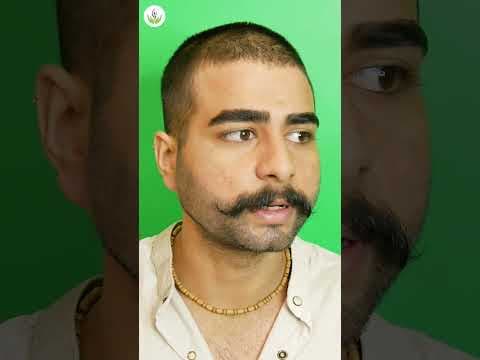
Patchy or uneven beard growth can affect confidence at any age. When grooming products or medicines fail, a beard transplant in Delhi offers a permanent and natural-looking solution.
At Care Well Medical Centre, your beard is designed to match your face shape, jawline, and natural hair direction. The goal is simple. A fuller, balanced beard that looks real in daily life.
Before treatment, your donor hair quality, beard pattern, and long-term growth plan are carefully assessed. You also receive clear guidance on beard transplant cost in Delhi, recovery time, and expected results.
This helps you make a confident decision without pressure.
✅ 20+ years of surgical experience
✅ Doctor-performed procedures only
✅ Natural beard design for every face
✅ Individually planned beard design for natural results
✅ Medically supervised treatment with structured follow-up care
Book a consultation today to check your suitability and get a personalised cost estimate.

🔒 Medical Transparency & Ethical Care
✔ Ethical, doctor-led treatment
✔ No false cure or instant result claims
✔ Results explained with timelines and limitations
✔ Individual suitability assessed medically
Medically reviewed and performed by
Dr. Sandeep Bhasin, Senior Cosmetic Surgeon
Care Well Medical Centre, Delhi
Why Choose Care Well Medical Centre for Beard Transplant in Delhi
Choosing the right clinic is important for safe treatment and natural results. A beard transplant is a permanent decision, so experience and medical care matter.
At Care Well Medical Centre, every beard transplant in Delhi is personally planned and performed by Dr. Sandeep Bhasin, Senior Cosmetic Surgeon in Delhi.
The focus remains on natural beard design, patient safety, and honest guidance.
Doctor-led experience
Dr. Sandeep Bhasin handles the planning and procedure without delegation to technicians.
Natural-looking results
Beard design matches your face shape, jawline, and hair direction for a balanced appearance.
Medical safety standards
All procedures are carried out in a sterile OT setup following strict clinical protocols.
Honest guidance
You receive clear information about expected results, recovery time, and beard transplant cost in Delhi.
Easy Delhi NCR access
The clinic is easily accessible from South Delhi, Gurgaon, Noida, and nearby NCR areas.
To learn how a beard transplant improves undeveloped beard and moustache growth, you can read our complete explainer: Beard Transplant for Undeveloped Beard & Moustache Problems.
What Is a Beard Transplant?
In a beard transplant, we take healthy hair follicles from the scalp and implant them into beard areas with low density or visible gaps. We place each follicle at precise angles to match natural facial hair growth. We use scalp hair because it remains stable over time and blends naturally in the beard area. Unlike temporary products or medicines, this method delivers permanent growth, allowing the transplanted hair to grow, trim, and behave like a natural beard.

Who Is a Good Candidate for a Beard Transplant?
Many men in Delhi visit us because their beard growth feels uneven or incomplete. Some struggle with patchy cheeks. Others notice thin growth on the jawline or moustache area.
A beard transplant may suit you if your facial hair does not grow the way you expect, even after time and regular grooming.
✅ You May Be a Good Candidate If
✅ Genetic patchiness
Patchy beard growth on the cheeks, jawline, or moustache area.
✅ Low beard density
Hair grows, but the beard looks thin or uneven.
✅ Scars or gaps
Acne, injury, or old scars have created visible beard gaps.
Many Delhi patients choose this treatment to improve beard shape, density, and overall facial balance.
❌ When a Beard Transplant May Not Be Advised
🚫 Active skin conditions
Ongoing infection, irritation, or inflammation in the beard area.
🚫 Autoimmune hair loss
Conditions like alopecia areata that affect facial hair.
🚫 Donor or medical limitations
Poor donor hair quality or uncontrolled medical conditions.
Medical Assessment Is Essential
Every beard is different.
So, a personal consultation helps confirm suitability and set realistic expectations before treatment.
How I Plan a Natural Beard Design

A natural beard transplant depends more on planning than on the number of grafts used. Before any procedure, I assess facial structure, existing beard pattern, and long-term growth behaviour to ensure the final result looks balanced and natural over time.
My beard design process focuses on:
- Jawline assessment, so the beard complements facial structure rather than overpowering it.
- Facial symmetry analysis, because both sides of the face require different density planning.
- Precise hair angle and direction, which is essential for a beard to look natural in daily life.
- Long-term growth planning, allowing the transplanted hair to mature naturally with age.
Doctor’s Note
Poor planning is the most common reason for dissatisfaction after a beard transplant. Graft numbers alone do not create a natural beard. Design and direction matter far more.
Clinical Approach and Care Standards
Every beard transplant at my clinic follows a strictly doctor-led approach. I personally handle planning, execution, and supervision to ensure consistency and accountability throughout the process.
Care standards followed at Care Well Medical Centre include:
- Doctor-led planning and direct supervision at every stage
- Design-first approach, rather than focusing only on graft counts
- Strict patient screening and eligibility assessment for safety and realistic outcomes
- Clear counselling and expectation setting, including limitations and timelines
- We provide structured follow-up care to properly monitor healing and long-term results.
Beard Transplant Techniques – FUE vs FUT
We perform beard transplantation using two established surgical techniques: FUE and FUT. Both methods are medically valid, but we use them for different clinical situations. The choice depends on graft requirement, donor area quality, beard design needs, and long-term outcome planning. There is no single technique that suits every patient.
🔍 Quick Comparison (Read This First)
| Factor | FUE Beard Transplant | FUT Beard Transplant |
| Graft extraction | Individual follicles | Strip-based extraction |
| Scarring | Tiny dot scars | Fine linear scar |
| Precision for beard design | Very high | Moderate |
| Recovery time | Faster | Slightly longer |
| Best suited for | Patchy beard, design-focused cases | High graft requirement |
| Natural beard appearance | Excellent | Good |
| Common use in beard transplant | Preferred | Selective cases only |
👉 We choose the technique based on medical assessment, not personal preference. For a detailed understanding of donor extraction and scalp restoration, you can also explore our main Hair Transplant in Delhi treatment page.
➕ Detailed Explanation
FUE involves extracting individual hair follicles from the donor area using fine instruments. This technique allows precise control over graft placement, angle, and direction, which is especially important for achieving a natural-looking beard.
FUE is usually preferred when:
- Beard growth is patchy or uneven and requires targeted correction
- Natural hair angle and direction are a priority
- Minimal scarring and faster recovery are desired
Limitations of FUE:
- Procedure time can be longer
- Not ideal when very high graft numbers are required in a single session
The same advanced extraction method is also used in our FUE Hair Transplant procedures to ensure high graft survival and natural direction control.
FUT involves removing a thin strip of scalp from the donor area and dividing it into individual grafts. This method may be considered in select cases where a larger number of follicles are required.
FUT may be used when:
- High graft numbers are needed in one session
- Donor area density is strong and stable
Limitations of FUT:
- Leaves a fine linear scar in the donor area
- Offers less flexibility for precise beard angle planning
If you want to understand how the strip method works for high-graft procedures, you can read our detailed page on FUT Hair Transplant.
Choosing the Right Technique
There is no universal “best” technique for every patient. In beard transplantation, we prefer FUE in most cases because it offers greater precision and a more natural appearance. We make the final decision only after evaluating your beard pattern, donor hair quality, and long-term goals during consultation. The priority is always safety, suitability, and realistic outcomes.
What Happens During the Procedure?
A beard transplant is a planned, step-by-step medical procedure performed under local anaesthesia. The focus throughout is comfort, precision, and graft safety. Here is what you can expect on the day of treatment.
Consultation and final assessment
Before starting, I re-evaluate your beard pattern, donor area, and the agreed design. We address any remaining questions to keep expectations clear and realistic.
Beard design and markings
The beard outline and density zones are marked on your face. This design guides angle, direction, and distribution, ensuring a natural and balanced appearance.
Local anaesthesia
Local anaesthesia is applied to both donor and beard areas. This keeps the procedure comfortable while you remain awake and relaxed.
Follicle extraction
We carefully extract healthy hair follicles from the donor area using the selected technique and check each graft for quality and viability.
Implantation of grafts
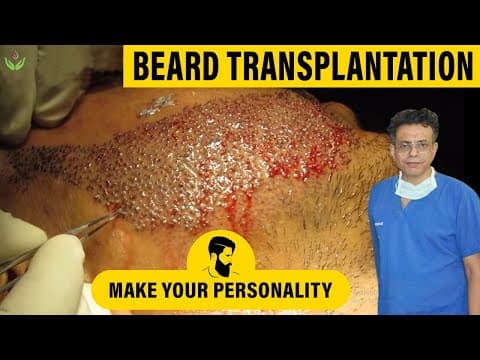
We create tiny recipient sites in the beard area and implant each follicle at the correct depth and angle to match natural beard growth.
The procedure is carried out in a sterile clinical environment, usually completed in a single session. Most patients remain comfortable throughout and are able to return home the same day, resuming light activities within twenty four hours with clear aftercare guidance.
We perform all beard transplant procedures in a sterile OT setup under direct medical supervision.
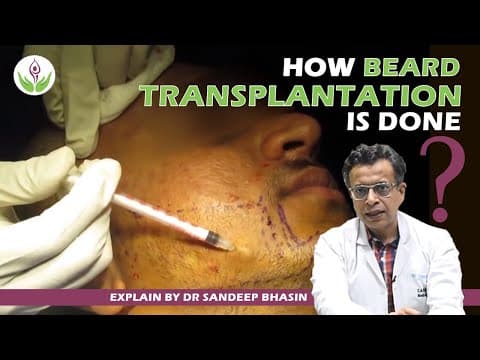
The procedure is performed under local anaesthesia in a sterile clinical setting. This video is for educational understanding only.
You return home the same day with written aftercare guidance.
Beard Transplant Before and After – What to Expect


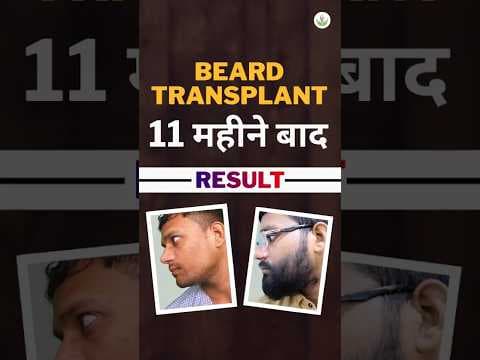
The before and after photos below show the natural progression of beard growth, not instant results. Transplanted hair sheds temporarily in the first few weeks, followed by gradual new growth from around three months. Visible improvement appears between six to nine months, with final density and shape seen by twelve months.
These are real cases treated at Care Well Medical Centre. Results vary based on beard pattern, donor hair quality, skin type, and healing response. The aim is natural blending with existing facial hair, allowing normal trimming and styling once growth is complete.
Images are shared to demonstrate realistic outcomes under medical supervision. Individual results may vary.
Beard Transplant Results Timeline
Beard transplant results develop gradually and follow a predictable biological cycle. Understanding this timeline helps set realistic expectations and reduces unnecessary worry during early stages.
Shock loss (3–4 weeks)
Most transplanted hairs shed within the first few weeks. This is normal and temporary. The follicles remain healthy beneath the skin.
3 months – Early growth
New beard hairs begin to appear. Growth is usually fine and light at this stage, confirming graft activation.
6 months – Visible improvement
Beard density increases noticeably. Hair becomes thicker, darker, and more consistent across treated areas.
9 months – Shape and coverage
The beard looks fuller and more uniform. Styling becomes easier as growth stabilises.
12 months – Final result
Full density, texture, and natural integration are achieved. The beard behaves like normal facial hair and continues to grow permanently.
Healing speed and growth may vary slightly between individuals, depending on donor quality, skin type, and aftercare compliance.
Recovery and Aftercare
Proper recovery and aftercare play a major role in graft survival and final results. Most patients find recovery straightforward when basic instructions are followed carefully.
Mild redness, swelling, or tiny scabs are common during the first few days. These settle naturally. Keep the beard area clean, avoid touching or scratching, and follow the washing instructions provided. Most patients return to routine work within one to two days.
Shaving or trimming should be avoided for the first ten to fourteen days. Once the grafts are stable, light trimming is allowed. Full grooming and styling can resume gradually as new growth appears over the next few months.
Avoid smoking, alcohol, heavy workouts, and excessive sun exposure during early healing. Rubbing the beard area, using unapproved products, or ignoring aftercare advice can affect results.
Following these guidelines supports smooth healing and predictable, natural beard growth.
Beard Transplant Side Effects and Safety
A beard transplant is generally safe when performed under proper medical supervision. Like any surgical procedure, it can have temporary side effects. These are usually mild and settle with correct aftercare.
Common, short-term effects
- Redness and swelling: Mild redness or swelling may appear in the beard or donor area for a few days. This settles naturally without intervention.
- Folliculitis: Small pimple-like bumps can occur as new hairs begin to grow. This is temporary and often indicates follicle activity.
- Sensitivity or tightness: A brief feeling of tightness or numbness may occur and resolves on its own.
Rare risks
Serious complications are uncommon. When proper screening, sterile technique, and correct planning are followed, the risk of infection, poor growth, or scarring remains low. Careful follow-up further reduces these risks. To learn more about scarring and healing patterns, you can read our detailed guide: Do Beard Hair Transplants Leave Scars?
What This Treatment Cannot Do
It is equally important to understand the limitations of a beard transplant.
- It cannot create an instant beard. Growth follows a natural timeline over several months.
- It cannot change your genetics. The procedure improves density but does not alter natural hair characteristics.
- It cannot provide unlimited density. Results depend on donor hair quality and safe graft limits.
Clear counselling, realistic expectations, and medical screening are essential for safe outcomes. Individual responses may vary based on skin type, healing capacity, and adherence to aftercare advice.
Beard Transplant Success Rate – What Influences It
A beard transplant does not have a fixed success percentage that applies to everyone. In my experience, outcomes depend on a few key factors working together. When these are planned correctly, results are usually stable and long lasting.
Donor hair quality
Healthy, stable donor hair from the scalp is the foundation of good results. Thicker follicles with strong growth patterns adapt better in the beard area and maintain density over time.
Surgeon skill and planning
Success is closely linked to how grafts are handled and placed. Proper design, correct angle, and gentle implantation protect graft survival and ensure the beard grows in a natural direction.
Aftercare and patient compliance
Healing does not end on the day of the procedure. Patients who follow aftercare advice, avoid smoking, and attend follow-up visits consistently see better growth and more uniform density.
When donor selection, surgical planning, and aftercare align, beard transplant results are reliable and natural. Individual healing responses can vary.
Beard Transplant Cost in Delhi
The beard transplant cost in Delhi depends on proper medical planning, not on fixed package prices.
Every beard is different, so the final cost is decided only after evaluating your beard pattern, donor hair quality, and required graft numbers.
You receive clear and transparent pricing during consultation, so you can plan with confidence.
Typical Cost Range in Delhi
Most beard transplant procedures in Delhi fall within the following range:
| Treatment Scope | Approximate Cost (INR) |
| Small patch correction | ₹45,000 – ₹70,000 |
| Moderate density restoration | ₹70,000 – ₹1,10,000 |
| Full beard restoration | ₹1,10,000 – ₹1,50,000 |
These figures are indicative. Final cost is confirmed after consultation. Final graft count and cost are confirmed only after medical evaluation.
We do not offer fixed packages, because beard design varies for every face.
Beard transplants are commonly priced per graft, usually ranging from ₹30 to ₹60 per graft. This reflects the time, precision, and skill required for extraction and implantation, especially for correct angle and direction in the beard area.
Several factors influence the final cost:
- Number of grafts needed: Depends on beard style, density goals, and existing growth
- Technique used: FUE typically costs more due to precision and minimal scarring
- Donor hair quality: Strong donor hair may reduce total graft requirements
- Procedure duration: Longer sessions increase operative time and resources
- Surgeon involvement: Direct, doctor-led planning and execution impact outcomes and cost
Transparent pricing helps you plan confidently, with no hidden charges. Cost decisions balance safety, suitability, and realistic expectations.
Beard Transplant Near Me – Delhi NCR
Care Well Medical Centre is located in South Delhi, making it convenient for patients across Delhi NCR.
Many men search for a beard transplant near them to save travel time and make follow-up visits easier.
The clinic is easily accessible from:
- South Delhi
- Gurgaon
- Noida
- Faridabad
- Other NCR areas
Easy Metro and Road Access
The centre is well connected by major roads and nearby metro stations.
Patients can reach the clinic comfortably by car, cab, or metro without travel stress.
Parking and Reachability
Parking options are available near the clinic for added convenience.
Clear Google Maps directions help first-time visitors reach the location smoothly.
Why Local Access Matters
Being close to your clinic makes:
- Consultations easier
- Follow-up visits stress-free
- Recovery support more convenient
Local access plays an important role in safe and comfortable beard transplant care.
Patient Reviews & Testimonials
Real patient experiences help you understand what to expect beyond medical explanations. The feedback shared here reflects genuine beard transplant journeys at Care Well Medical Centre, focusing on comfort during the procedure, clarity of counselling, and overall care.
Real Patient Video Testimonials
Short, real patient videos sharing their beard transplant experience and results.
Google Reviews from Our Patients
Verified reviews from our Google Business Profile, shared directly by patients after their clinic visit.
Book a Consultation With Dr. Sandeep Bhasin
A consultation helps determine whether a beard transplant is suitable for you. During this visit, we assess your beard pattern, donor hair quality, and expectations, and then provide clear guidance on results, timeline, and cost.
You can book your consultation through:
- Call for direct assistance
- WhatsApp for quick queries or appointment coordination
- Online booking to choose a convenient clinic visit
The focus is always on clarity, safety, and realistic outcomes.
If you prefer natural improvement before choosing a procedure, you can explore our guide on How to Grow a Beard Faster.
FAQs About Beard Transplant
Yes. A beard transplant provides permanent results because the hair follicles are taken from the scalp, which is resistant to hair loss. Once transplanted and healed, these follicles continue to grow for life like normal facial hair. You can shave, trim, or style the beard naturally after full growth.
Initial growth usually begins around three months after the procedure. Hair density improves gradually between six and nine months. Final shape, texture, and thickness are typically visible by twelve months. Temporary shedding in the first few weeks is normal and does not affect the final outcome.
The procedure is performed under local anaesthesia, so pain is minimal during treatment. You may feel mild tightness or sensitivity afterward, which usually settles within a few days. Most patients describe the experience as comfortable and manageable with simple post-procedure care.
Graft requirements vary depending on beard style, existing density, and coverage goals. Small patch correction may need a few hundred grafts, while full beard restoration can require over one thousand grafts. The exact number is decided after assessing your beard pattern and donor hair quality.
Common side effects include temporary redness, swelling, or small bumps during early healing. These usually resolve on their own. Serious complications are rare when the procedure is properly planned and performed under medical supervision. Following aftercare instructions reduces risks further.
Not everyone is an ideal candidate. Active skin infections, autoimmune hair loss conditions, poor donor hair quality, or uncontrolled medical problems may delay or prevent treatment. A medical evaluation is essential to confirm suitability and ensure safe, realistic outcomes.
Most patients return to routine activities within one to two days. Scabs fall off naturally within about a week. Shaving or trimming is usually allowed after ten to fourteen days. Full recovery continues internally as hair growth progresses over several months.
Yes, when planned correctly. Natural results depend on proper design, correct hair angle, and balanced density. With careful placement, the transplanted hair blends seamlessly with existing facial hair and looks natural even on close inspection.
Yes. Smoking reduces blood flow and oxygen supply, which can affect graft survival and healing. Patients are advised to stop smoking at least one week before and two weeks after the procedure to support optimal growth and recovery.
Absolutely. Consultation allows proper assessment of your beard pattern, donor hair, medical history, and expectations. It helps determine suitability, estimate graft requirements, discuss costs, and clarify realistic results before proceeding.
Medical Transparency
Medically reviewed by: Dr. Sandeep Bhasin, Senior Cosmetic Surgeon
Clinic: Care Well Medical Centre, Delhi
Last medically reviewed: March 2026
Disclaimer:
This information is provided for general awareness and does not replace a personal medical consultation. Treatment suitability and results vary for each individual.