 By
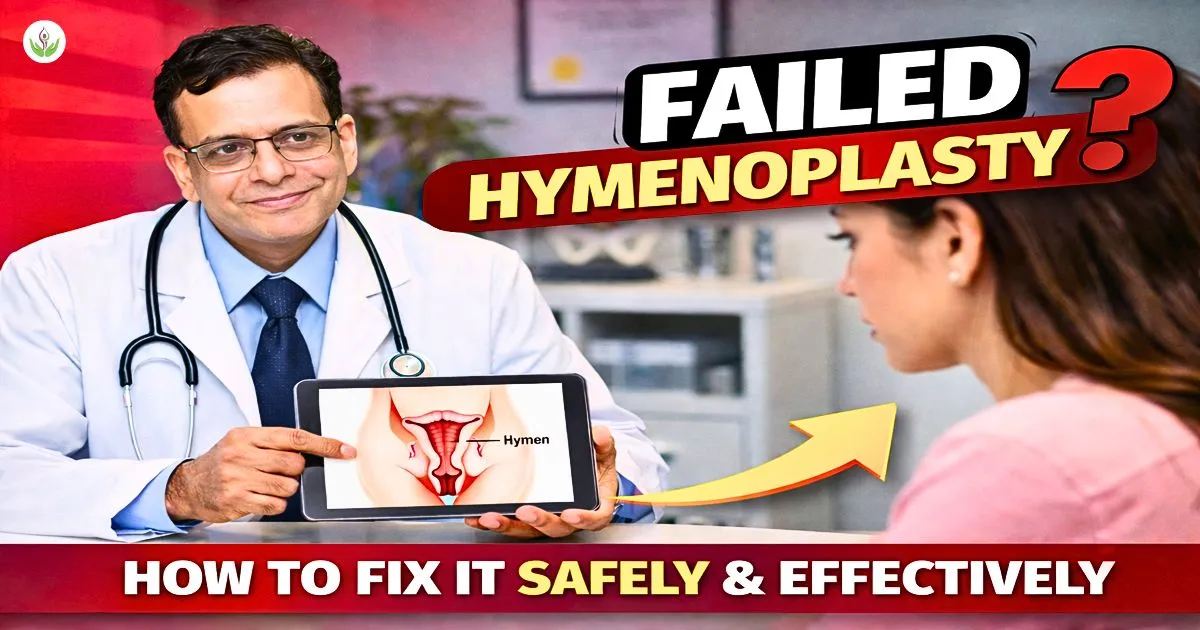
ByA failed hymenoplasty can feel frightening, especially if your stitches opened early, there was no bleeding, or your wedding is approaching soon. In that moment of panic, you ask yourself: can hymenoplasty be done again safely, or is the situation irreversible?
Over the past 20 years as a surgeon at Care Well Medical Centre in Delhi, I have treated many women facing this exact concern. When adequate healing time has passed, we can safely evaluate and correct most unsuccessful hymen repairs with revision hymenoplasty.
However, before we discuss whether a second procedure is possible for your specific case, we must first understand what actually happened medically. Clarity about the surgical cause of failure is the very first step toward a safe correction.
When Does Hymenoplasty Actually Fail?
Not every concern after surgery means the procedure has failed. In medical terms, a failed hymenoplasty refers to a situation where the reconstructed hymenal tissue does not heal or hold as intended. However, patients often interpret normal healing variations as surgical failure.
A true surgical failure involves structural breakdown, such as stitches opening or tissue not bonding properly. A perceived failure often occurs when expectations, especially regarding bleeding, do not match biological reality. In my clinical practice, perceived failure is more common than true structural breakdown. Therefore, proper examination is essential before drawing conclusions.
Common Signs of Failed Hymenoplasty
When a hymenoplasty genuinely fails, the signs are usually clear and physical. These may include:
- Wound dehiscence – stitches opening before complete healing
- Visible gap in the hymenal ring – incomplete or separated tissue
- Infection – discharge, foul smell, excessive swelling, or persistent pain
- Early tearing – reconstructed tissue breaking down within weeks
If any of these signs appear, evaluation by an experienced surgeon is necessary, ideally within 2 to 4 weeks of noticing the changes. Early assessment improves the chances of proper correction. However, mild discomfort or minor spotting during recovery does not automatically indicate failure.
No Bleeding After Hymenoplasty — Failure or Normal Variation?
Absence of bleeding is one of the most common reasons patients assume failure. Bleeding does not occur in every case, even after successful hymen reconstruction.
Hymenal thickness and elasticity vary naturally. Some women bleed minimally. Some do not bleed at all. This variation exists even in women with untouched natural hymens.
In my experience, psychological expectation often creates unnecessary fear. Surgery restores anatomical structure, not a fixed bleeding pattern. If you would like a deeper medical explanation of how bleeding varies naturally after reconstruction, you can read more about this topic in detail. Only a physical examination can confirm whether the repair is intact.
No bleeding alone is not evidence of surgical failure.
Why Does Hymenoplasty Fail?
When a hymenoplasty fails, biological or technical factors usually cause it, and clinicians can identify the exact reason during a proper examination. Failure is rarely random. Healing depends on blood supply, tissue quality, surgical precision, and post-operative care. If any of these elements fail, the repair may not hold securely.
What commonly leads to repeat breakdown is failure to identify the original weakness before planning revision. The second surgery should correct the original weakness, not simply repeat the same approach. Therefore, we must examine both surgical factors and patient-related healing factors carefully.
Surgical Factors
Several technical issues during the first procedure can increase the risk of breakdown.
- Excess tension on sutures – When a surgeon places stitches under excessive tension, the delicate hymenal tissue may tear before it bonds securely.
- Poor tissue handling – Excessive cautery or rough manipulation can damage fragile mucosal tissue and reduce its ability to heal.
- Inadequate flap technique – In some anatomical cases, simple edge stitching does not provide enough structural support.
- Tight suturing causing ischemia – When a surgeon stitches the tissue edges too tightly, the procedure reduces blood flow. This reduced circulation causes ischemia and can weaken the repair. Without adequate blood supply, tissue may undergo necrosis, meaning it begins to die. As a result, stitches lose support and break down prematurely.
- Suture material issues – Rapidly absorbing dissolvable sutures may lose strength before the tissue has fully healed, weakening the repair.
Surgeons often underestimate ischemia. Tissue may appear stable immediately after surgery, yet fail days later if reduced circulation weakens healing. Balanced tension and precise technique are therefore critical.
However, surgical technique alone does not determine outcome. The body’s own healing capacity plays an equally important role.
Biological and Patient Factors
Even when surgery is technically sound, healing depends on the body’s response.
- Infection can disrupt tissue bonding and weaken sutures.
- Early physical activity, including squatting, cycling, or intercourse before full healing, can strain delicate repair sites.
- Smoking reduces oxygen delivery to tissues, slowing healing and increasing breakdown risk.
- Diabetes, especially if uncontrolled, impairs wound healing and raises infection risk.
- Poor baseline vascularity in some women naturally limits tissue nourishment and slows repair.
- Scar tissue from a previous repair has reduced elasticity and blood supply, making secondary healing more fragile.
In my clinical practice, I evaluate these factors carefully before advising any revision. When we clearly identify the reason for failure, we can plan a safer and more predictable correction.
Understanding the cause is reassuring. It confirms that the situation is medical and manageable, not mysterious or permanent.
Can You Safely Undergo Hymenoplasty Again?
Yes, surgeons can safely repeat hymenoplasty in many cases, but only after proper healing and careful evaluation. Before considering revision, it is helpful to understand how the original hymenoplasty procedure is performed and what normal healing involves.
Patients often ask, “How many times can we repeat hymenoplasty?” Surgeons do not follow a strict fixed number when planning revision. In practice, two surgical attempts are feasible in most patients who have adequate healthy tissue. A third attempt is occasionally possible, but it requires very careful assessment of scar quality and blood supply.
I generally recommend a minimum waiting period of 3 to 6 months between surgeries. This is because scar maturation and neovascularization, which means the formation of new blood vessels, take time. Attempting revision before the tissue regains stable circulation increases the risk of repeat breakdown.
Before planning revision, I assess:
- Scar thickness and elasticity
- Residual mucosal tissue availability
- Blood supply and tissue vascularity
- Signs of persistent inflammation
Because scar tissue is less elastic and sometimes less vascular than untouched tissue, revision hymenoplasty is technically more delicate than the first surgery. Precision and timing become even more important.
Timing is perhaps the most emotionally difficult aspect of revision planning, particularly for patients with an upcoming wedding.
What If My Wedding Is in 4 Weeks?
This is one of the most stressful situations I encounter in practice. If your wedding is within four weeks, the first step should be examination to confirm whether the repair is actually intact — not immediate re-surgery.
If examination confirms the repair is intact, no intervention is required.
Many patients assume failure without clinical confirmation.
When breakdown is recent, rushed revision is risky because:
- Immature scar tissue and unstable blood supply increase failure risk
- Temporary quick-fix solutions are medically unreliable and discouraged
Full tissue remodelling cannot be accelerated safely. For a clearer understanding of ideal surgical timing before marriage, you may review guidance on hymenoplasty before marriage timing. While urgency is understandable, safety must always guide decision-making.
In many cases, reassurance after examination resolves more fear than another surgery would.
Is Revision Hymenoplasty Safe?
Yes, revision hymenoplasty is generally safe when performed after proper healing and detailed evaluation. After a failed hymenoplasty, it is completely natural to feel hesitant about surgery again, and safety becomes your primary concern.
Revision is technically more delicate because scar tissue reduces elasticity and blood supply. This may slightly increase infection risk compared to a first procedure. However, when patients follow the recommended 3–6 month healing interval and maintain adequate tissue quality, serious complications rarely occur in healthy individuals.
Before planning revision, I routinely assess:
- Blood sugar levels
- Hemoglobin levels
- Bleeding profile
- Signs of persistent inflammation
These checks minimise avoidable risks. Surgeons usually perform the procedure under local anesthesia with sedation, and medically fit individuals rarely experience anesthesia-related complications.
Discomfort is generally similar to the first surgery. Some patients notice mild additional soreness due to scar tissue handling, but it is manageable with standard oral medication. Most carefully selected revision cases heal without major complications when timing and tissue quality are appropriate.
When timing, technique, and patient selection are appropriate, revision hymenoplasty remains a safe and controlled procedure.
What Does Revision Hymenoplasty Cost in Delhi?
In Delhi, surgeons typically perform revision hymenoplasty within a cost range of ₹35,000 to ₹70,000, depending on the extent of scar tissue and the need for advanced flap reconstruction. Because revision involves altered anatomy and reduced tissue elasticity, it can be slightly more expensive than a primary procedure. You can also review the broader factors affecting hymenoplasty cost in Delhi to understand how pricing varies across cases.
The final cost usually depends on:
- Extent of scar tissue and need for careful excision
- Whether flap reconstruction is necessary
- Type of anesthesia used
- Duration of surgery
- Pre-operative investigations and consultation evaluation
Revision cases often require more delicate handling to preserve blood supply, which can increase operative time. In my experience, surgical complexity — not location alone — is what truly determines cost.
What Is Different in Revision Hymenoplasty?
Revision hymenoplasty is not simply a repeat of the first surgery. Because scar tissue has already formed, the anatomy and blood supply are altered. This makes revision technically more delicate and requires a different approach.
Simple edge stitching often fails in revision cases because scar tissue has reduced elasticity and lower vascularity. It does not hold sutures as reliably as fresh tissue. Therefore, the first step in revision surgery is usually careful excision of fibrotic scar tissue to expose fresh, healthy bleeding edges. Without viable tissue, healing cannot occur properly.
In selected cases, surgeons may use stronger flap-based techniques, such as:
- Vaginal mucosal flap technique
- Superficial transverse (ST) flap reinforcement
- Labia minora flap support
These methods redistribute tension and improve structural stability compared to simple re-suturing.
Revision success depends less on stitching technique alone and more on proper scar assessment, controlled excision, and preservation of blood supply.
Post-Operative Wound Care After Revision Surgery
Healing after revision hymenoplasty requires greater discipline than the first procedure. Understanding the full hymenoplasty recovery timeline helps protect the repair during the critical healing phase. Scar tissue has reduced vascularity, meaning blood supply is lower and oxygen delivery to the tissue is slower. Because circulation supports healing, this difference makes the second recovery phase more sensitive.
To protect the repair, I advise:
- Strict activity restriction — avoid squatting, stretching, cycling, or lifting for the recommended period.
- Hematoma prevention — minimise pressure on the area to prevent internal blood collection.
- Infection control — maintain dryness and hygiene, particularly in humid climates like Delhi.
- Respect for dissolvable sutures — avoid early strain, as sutures lose strength before full tissue bonding occurs.
In revision cases, early mechanical stress is a more common cause of breakdown than surgical error. When patients follow aftercare instructions carefully, healing is stable and outcomes are predictable.
The surgery may be delicate, but disciplined recovery is what truly protects the result.
What to Expect During a Revision Consultation
A revision consultation is a focused anatomical evaluation. The purpose is to determine whether safe reconstruction is possible and what surgical approach would provide stability. After a failed hymenoplasty, examination must guide the decision, not assumption.
During evaluation, I assess:
- Scar tissue mapping — thickness and pattern of previous scarring
- Tissue elasticity — whether closure can occur without excessive tension
- Mucosal availability — presence of adequate healthy tissue
- Infection screening — subtle inflammation that could impair healing
- Vascularity assessment — adequacy of blood supply for stable bonding
Scar tissue has reduced elasticity and lower vascularity compared to untouched mucosa. If reconstruction is attempted over poorly perfused tissue, breakdown risk increases. This structured assessment helps prevent unnecessary repeat surgery.
Careful evaluation allows surgeons to plan revision at the right time, choose the appropriate technique, and proceed for the right reason.
How to Recognise a Reliable Surgeon for Revision Hymenoplasty
Revision surgery demands more technical judgement than a primary hymenoplasty. Therefore, surgeon selection becomes especially important.
Look for:
- Documented experience in revision hymenoplasty, including scar management
- Clear explanation of when flap techniques are required instead of simple re-stitching
- Realistic discussion of risks and healing limitations
- No guaranteed bleeding claims
- Clear guidance on minimum waiting period before surgery
A responsible surgeon prioritises tissue health and timing over urgency. In revision cases, careful planning matters more than speed.
Can a Different Surgeon Fix My Failed Hymenoplasty?
Yes, a different surgeon can safely revise a failed hymenoplasty. Specialists with experience in corrective procedures frequently manage these cases. There is no medical requirement to return to the original surgeon — careful reassessment is what matters.
If you seek a second opinion, the following are essential:
- Honest disclosure of the previous surgery, including timing and any complications
- Operative records, if available
- Detailed anatomical evaluation before planning revision
Identifying the exact cause of the first failure is critical. Without understanding scar quality, tissue viability, and prior technique, repeating surgery may not improve stability.
Seeking another opinion after a difficult experience is medically appropriate. With transparent history and proper evaluation, revision by a different surgeon can be both safe and successful.
When Should You Avoid a Second Hymenoplasty?
Although revision hymenoplasty is often possible, there are situations where postponing or avoiding surgery is medically safer. A responsible decision sometimes means not operating immediately.
You should avoid or delay a second hymenoplasty if:
- Active infection is present — untreated discharge or inflammation can compromise healing and increase breakdown risk.
- Poor tissue viability is identified — severely scarred or poorly vascularised tissue may not support stable reconstruction.
- Uncontrolled diabetes or systemic illness exists — impaired wound healing significantly raises complication risk.
- Significant psychological distress is ongoing — surgery should not be performed under emotional pressure or fear.
- Expectations are unrealistic — no surgeon can guarantee specific bleeding patterns or outcomes.
In such cases, the safest approach may be to treat the underlying issue first, allow additional healing time, or reconsider whether surgery is appropriate.
Ethically, corrective surgery should only be performed when tissue health, timing, and emotional readiness are aligned. Operating despite contraindications increases the risk of repeat failure.
Sometimes waiting — or even declining surgery — is the most medically sound decision.
FAQs About Failed Hymenoplasty and Revision Surgery
A true failed hymenoplasty usually presents with physical signs such as stitches opening, a visible gap in the reconstructed ring, infection, or early tearing. However, absence of bleeding alone does not confirm failure. A proper anatomical examination is the only reliable way to determine whether revision hymenoplasty is required.
Yes, if healing is incomplete or the area is strained early, the repair can break down. Activities such as deep squatting, cycling, or intercourse before full healing increase this risk. When the recommended recovery period is respected, premature tearing is uncommon.
Most patients should wait at least 3 to 6 months before considering revision hymenoplasty. This allows scar tissue to mature and new blood vessels to form and stabilise tissue circulation. Operating too early increases the risk of repeat breakdown.
Discomfort after revision is usually similar to the primary procedure. Some patients may experience slightly increased soreness due to scar tissue handling. However, pain is typically mild to moderate and manageable with standard oral medication during the early recovery period.
No. Bleeding is not medically guaranteed, even after successful reconstruction. Hymenal thickness and vascularity vary naturally between individuals. Surgery restores structure but cannot promise a specific bleeding pattern.
Scar tissue has reduced elasticity and lower blood supply compared to normal mucosa. This makes revision more delicate and may require careful excision of fibrotic tissue before reconstruction. Proper scar assessment helps reduce the risk of repeat failure.
Yes. When performed using appropriate flap techniques and adequate healthy tissue, revision hymenoplasty can restore a natural appearance and texture. However, the final outcome depends on tissue quality and the extent of scarring from the first surgery.