 By
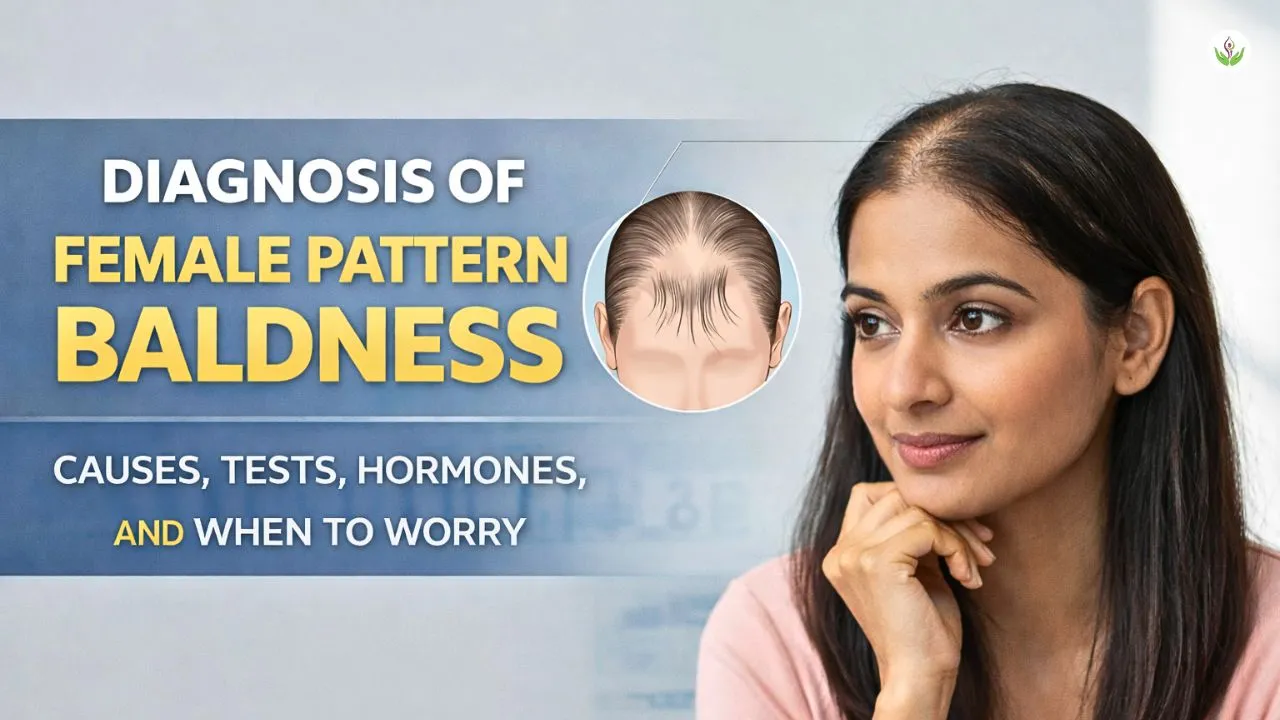
ByHair loss in women is emotionally unsettling, but medically, it is most often a reversible signal rather than permanent damage. In my practice, women most often ask why they are losing so much hair. I see anxiety increase not because treatment is unavailable, but because doctors frequently overlook the diagnosis of hair loss in women. Without understanding the cause, even the best remedies fail to deliver lasting results.
Hair fall is never random. Stress, hormonal changes, nutritional deficiencies, medical conditions, and lifestyle habits quietly disturb the hair growth cycle. In cities like Delhi, chronic stress, irregular meals, pollution exposure, and poor sleep further aggravate this imbalance.
This article reflects how I explain hair loss during a consultation — clearly, calmly, and step by step. You will understand when hair fall is normal, when it needs evaluation, which tests truly matter, and when you should be concerned. The goal is clarity, not confusion — so you can stop guessing and start addressing the real cause.
Let me first explain why hair loss starts, before we discuss tests and treatment.
All medical information reviewed and verified by Dr Sandeep Bhasin, Senior Cosmetic Surgeon, Delhi.
Last medically reviewed: January 2026.
Why Am I Losing So Much Hair as a Woman?
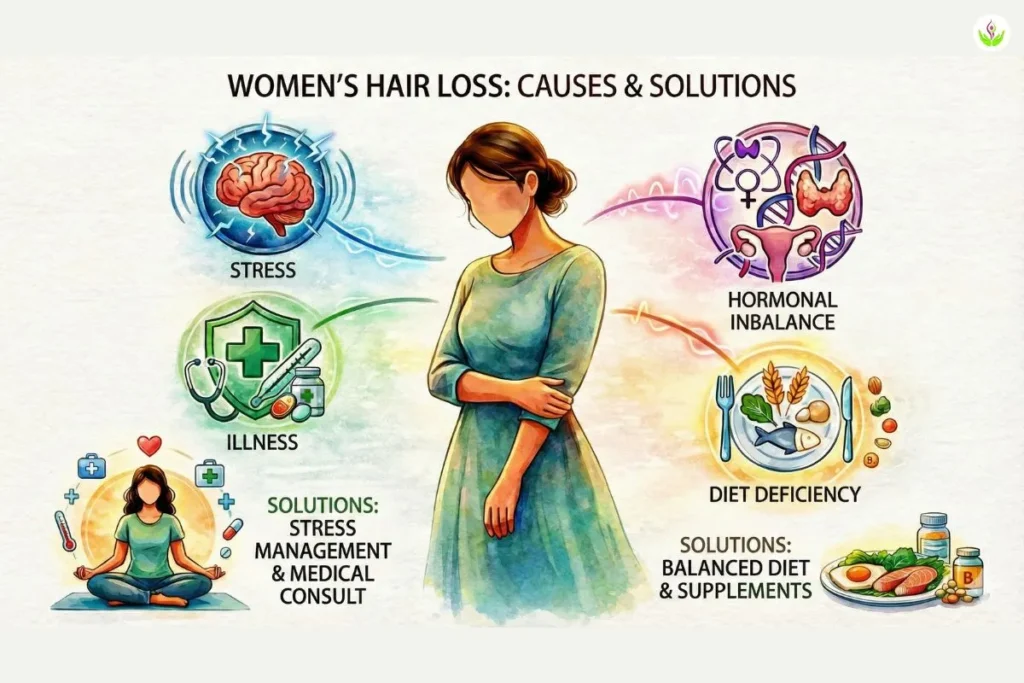
Some daily hair fall is normal and part of the natural hair growth cycle. However, hair loss becomes a concern when the shedding is clearly excessive or when visible changes appear, such as a thinner ponytail, a widening part, or more hair in the shower drain. This leads to the pressing question: why am I losing so much hair? As a woman, understanding your specific triggers is the first step toward recovery.
Hair loss in women usually follows one of two patterns. Sudden hair fall often occurs after a trigger and is commonly temporary. Gradual thinning develops slowly over months and may point toward an underlying condition that needs medical evaluation.
The most frequent triggers I see in women include:








- Ongoing physical or emotional stress
- Rapid weight loss or crash dieting
- Childbirth and post-pregnancy hormonal shifts
- Illness or high fever
In India, especially in urban areas, post-viral hair loss has become increasingly common. Post Covid hair loss in females, as well as hair fall after dengue, typhoid, or viral fever, typically begins a few weeks after recovery and is usually reversible with correct care.
Another frequent concern is hard water exposure. Hard water does not damage hair roots directly, but it can cause scalp dryness, irritation, and hair shaft breakage, making hard water hair fall appear worse. Pollution further increases scalp sensitivity and can aggravate hair shedding in susceptible women.
Doctor’s note:
Hair loss is rarely random. It is usually a response to stress, illness, nutritional gaps, or hormonal imbalance. Once we identify the trigger, we can control hair fall more effectively.
Is Hair Loss in Women Normal or a Medical Problem?
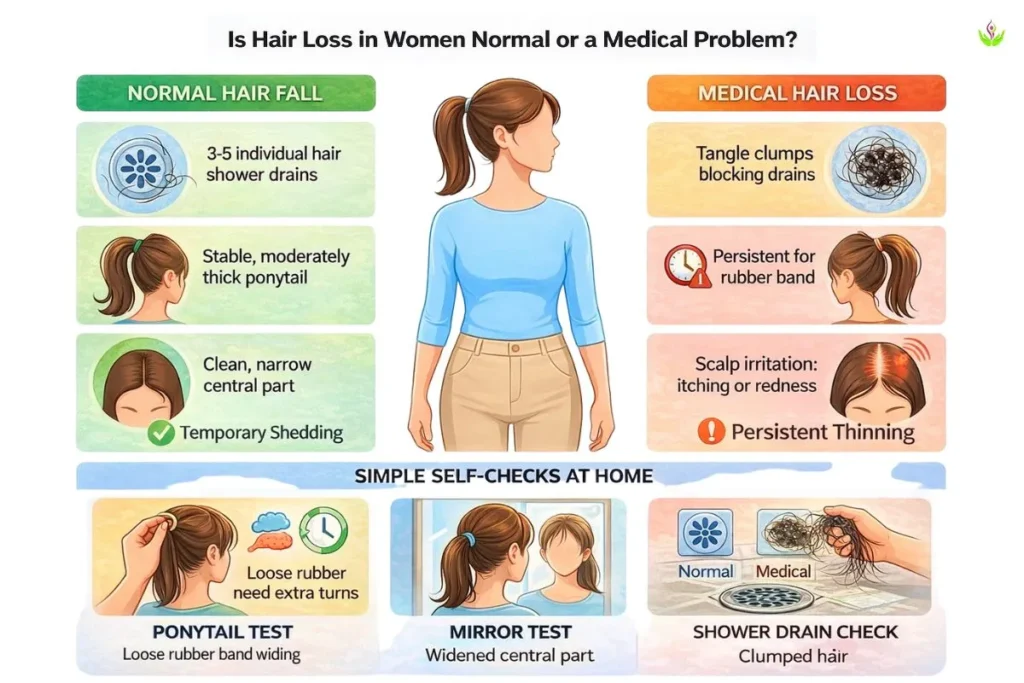
In my clinic, one of the most important things I help women understand is this: not all hair loss is abnormal. Many women experience temporary hair shedding after stress, illness, childbirth, or lifestyle disruption. The real challenge is recognising when hair fall is still within a normal range and when it has crossed into a medical issue that needs evaluation.
Before assuming the worst, there are a few simple checks I often ask my patients to do at home.
The Mirror Test: Simple Self-Checks at Home
These observations help you judge whether hair loss is becoming significant:
- Ponytail volume:
If your regular rubber band suddenly feels loose or needs more turns to hold your hair, it usually indicates reduced hair density. - Parting (maang) widening:
A clearly wider central part, often described as a Christmas tree pattern, suggests gradual thinning (commonly seen in female pattern hair loss) rather than routine shedding. - Shower drain check:
Seeing a few strands after washing is normal. Repeatedly noticing clumps or handfuls of hair is not and usually indicates active shedding.
When these changes are recent and mild, hair fall is often temporary. In such cases, I commonly see improvement once the underlying trigger settles — whether it is stress, fever, dietary imbalance, or a hormonal fluctuation.
Hair loss becomes a medical concern when it continues for several months, keeps progressing, or shows clear patterns such as frontal thinning, widening of the part, patchy hair loss, or scalp symptoms like itching, redness, or scaling. At this stage, waiting or self-treatment often delays recovery.
Doctor’s advice:
If hair loss is persistent, visibly increasing, or affecting your confidence, it is sensible to have it evaluated. Early diagnosis allows us to identify the cause calmly and manage it correctly, instead of guessing and worrying unnecessarily.
How Doctors Diagnose Hair Loss in Women
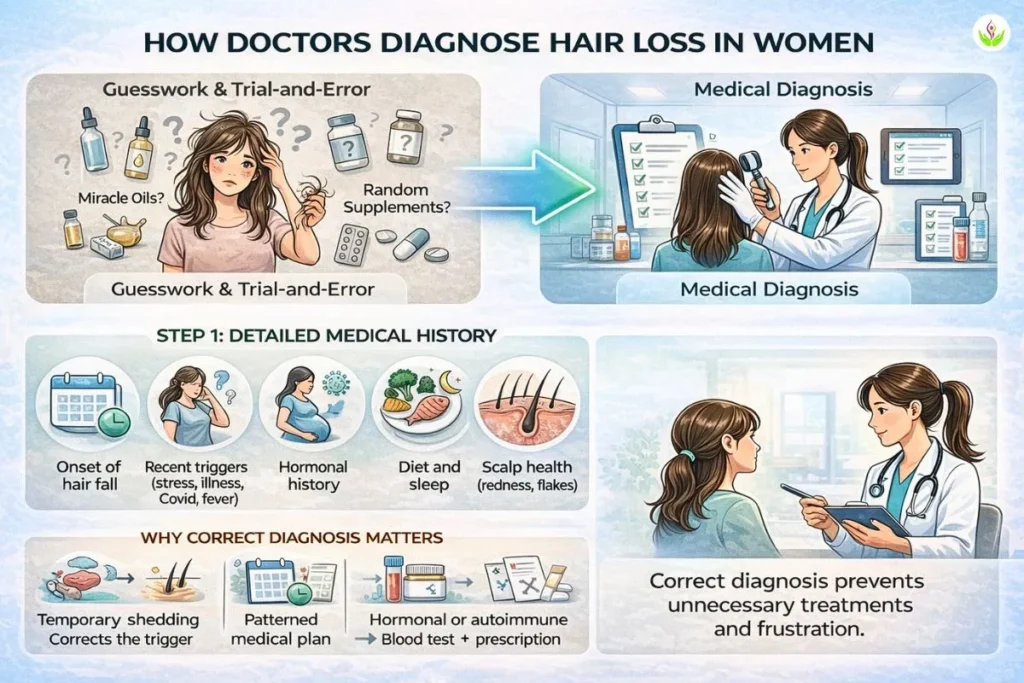
In my clinic, the most common reason hair loss treatment fails is guesswork. Women often start oils, supplements, or procedures without understanding the cause. Hair loss does not improve with trial-and-error. Doctors use medical diagnosis to identify the exact reason your hair cycle is disturbed, rather than simply treating visible shedding.
Diagnosis always begins with a detailed medical history, because hair loss often reflects events that happened 2–3 months earlier. During consultation, I focus on key points such as:
- Onset of hair fall: Is it sudden (shedding) or gradual (thinning)?
- Recent triggers: Stress, illness, fever, Covid, dengue, or weight loss
- Hormonal history: Pregnancy, childbirth, menstrual changes
- Lifestyle factors: Diet, sleep patterns, and medications or supplements
I then perform a careful scalp and hair examination, which often provides more answers than patients expect. During this step, I assess:
- Hair density and pattern: Whether thinning is diffuse or concentrated on the crown
- Frontal hairline and parting: Checking if the parting width has increased
- Scalp health: Redness, scaling, dandruff, or inflammation
- Hair miniaturisation: Whether strands are becoming thinner and weaker over time
In many women, this clinical evaluation itself points strongly toward the diagnosis, even before I consider blood tests.
Treatment fails when we skip diagnosis because each type of hair loss behaves differently:
- Temporary shedding needs correction of the trigger, not aggressive treatment.
- Patterned thinning needs long-term medical management.
- Supplements alone cannot correct hormonal or autoimmune causes.
Doctor’s perspective:
Correct diagnosis prevents unnecessary treatments, expense, and frustration. Once we clearly identify the cause, hair loss management becomes focused, predictable, and far more effective, instead of leading to repeated cycles of disappointment.
Common Types of Hair Loss in Females
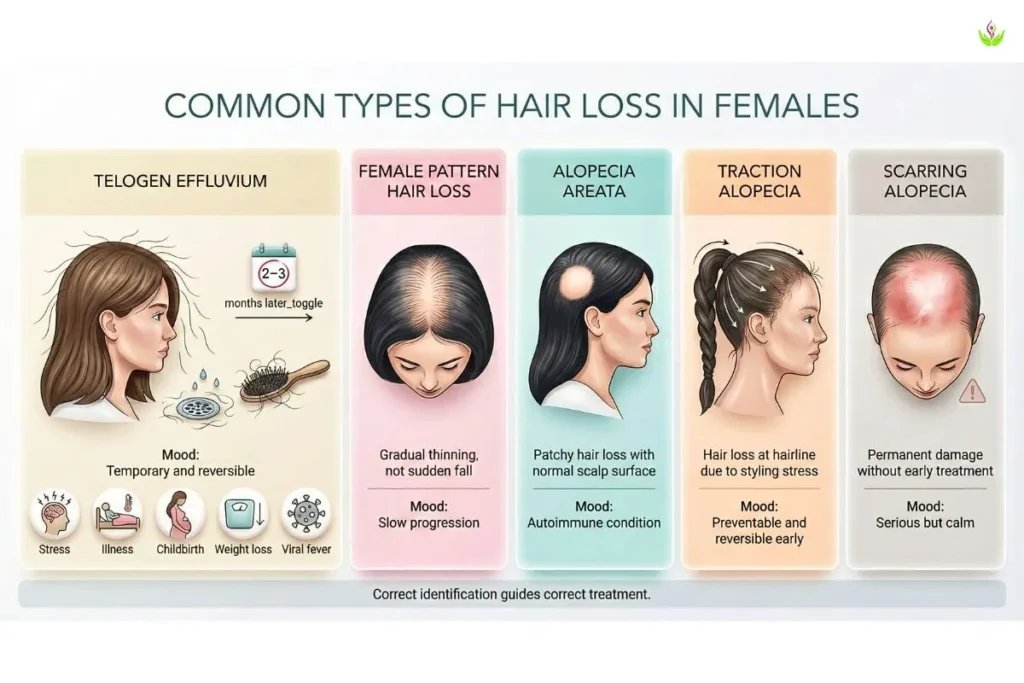
Below are the most common patterns of hair loss I see in women. Each behaves differently, which is why correct identification is essential.
- Telogen Effluvium
This is the most frequent cause of sudden hair fall in women. It usually occurs after stress, illness, childbirth, weight loss, or viral fever. The hair fall looks alarming but is often temporary and reversible once the trigger settles. - Female Pattern Hair Loss
This causes gradual thinning over the crown or widening of the central part. Hair density reduces slowly over years rather than falling out suddenly. It needs long-term medical management, not short-term remedies. - Alopecia Areata
This is an autoimmune condition where hair falls out in round or oval patches. The scalp usually looks smooth and normal. Early diagnosis is important because timely treatment improves regrowth. - Traction Alopecia
This happens due to constant pulling from tight hairstyles like ponytails, braids, or buns. Hair loss commonly affects the frontal hairline and temples, and early detection allows reversal by changing hair practices. - Scarring Alopecia
This is a less common but serious form of hair loss where inflammation damages hair follicles permanently. The scalp may look shiny, red, or scarred. Early medical evaluation is critical to prevent irreversible loss.
Which Hormone Causes Hair Loss in Females?
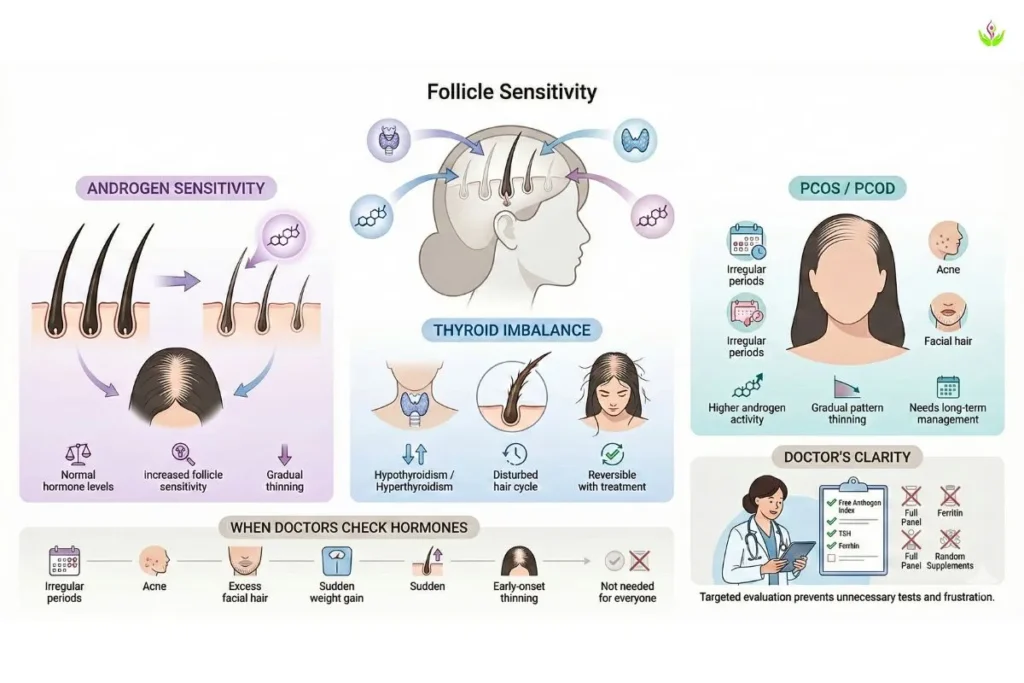
This is one of the most common questions I hear in my clinic. When women ask which hormone causes hair loss in females, the answer is not always one single hormone. In most cases, hair loss happens because of hormonal imbalance or increased sensitivity of hair follicles to hormones, not because hormones are “high” or “low” on paper.
The most important hormonal factors I evaluate are:
- Androgens (male-type hormones):
Women naturally produce small amounts of androgens. In some women, hair follicles are genetically more sensitive to these hormones. This sensitivity causes gradual thinning, especially over the crown or central part, even when hormone levels are within the normal range. - Thyroid imbalance:
Both low thyroid (hypothyroidism) and high thyroid (hyperthyroidism) can disturb the hair growth cycle. Hair may become dry, brittle, and shed excessively. Thyroid-related hair loss commonly improves once we stabilise thyroid levels. - PCOS / PCOD-related hair loss:
In women with PCOS or PCOD, higher androgen activity can lead to scalp hair thinning along with symptoms like irregular periods, acne, or facial hair growth. The hair loss pattern is usually gradual and needs long-term hormonal and medical management, not just supplements.
You do not need hormonal tests for every type of hair loss. I usually advise hormonal evaluation only when hair loss is accompanied by signs such as irregular periods, sudden weight gain, acne, excessive facial hair, infertility, or very early-onset thinning.
Doctor’s clarity:
Hormonal hair loss is manageable when identified early. Treating hair fall without understanding the hormonal background often leads to frustration. A targeted evaluation helps me avoid unnecessary tests and plan treatment correctly.
Which Vitamin Deficiency Causes Hair Loss in Women?
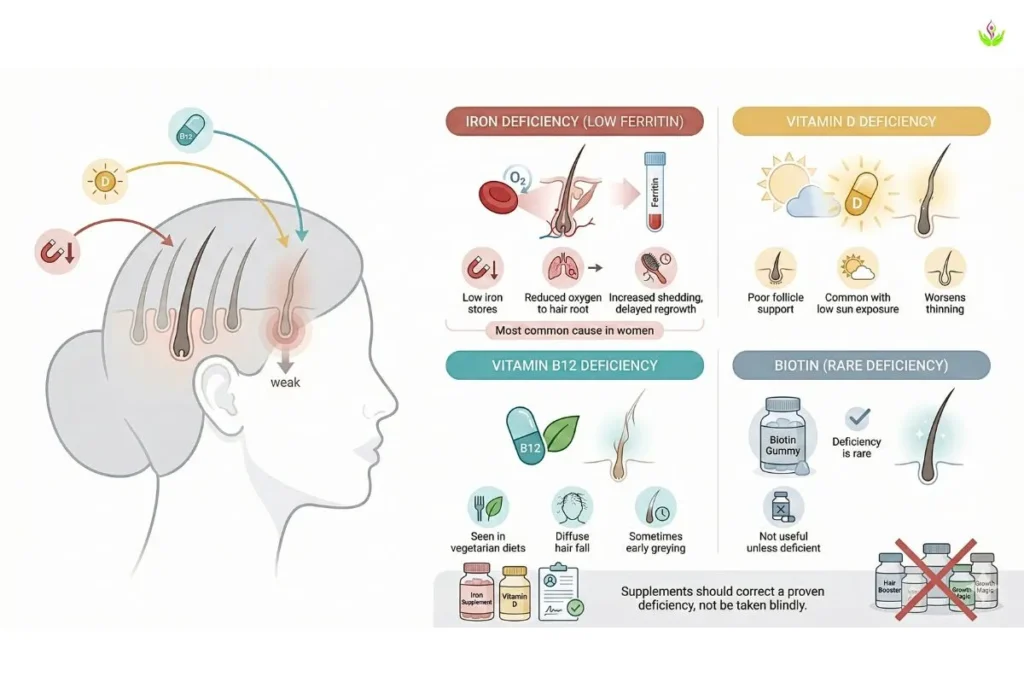
When women ask which vitamin deficiency causes hair loss, the most common and clinically significant cause I see in practice is iron deficiency, particularly low ferritin levels. Ferritin reflects your body’s iron stores, and depleted iron stores make hair follicles struggle to sustain a healthy growth cycle, which increases shedding.
The key nutritional deficiencies linked to hair loss in women include:
- Iron (low ferritin):
This is the most frequent cause in Indian women. Low iron stores reduce oxygen supply to the hair root, pushing hair into the shedding phase and delaying regrowth. - Vitamin D:
Vitamin D supports normal hair follicle function. Deficiency is extremely common in women with limited sun exposure, especially in urban settings like Delhi, and can worsen thinning. - Vitamin B12:
Often seen in vegetarian diets, digestive disorders, or chronic fatigue. Low levels may contribute to diffuse hair fall and, in some cases, premature greying. - A note on Biotin:
Many women start biotin gummies immediately. In reality, true biotin deficiency is rare. Taking extra biotin usually does not improve hair loss unless a genuine deficiency exists.
What I strongly caution against is blind supplementation. Taking iron or vitamins without testing does not speed up hair recovery and can sometimes cause harm. Excess iron, in particular, may lead to gastric discomfort and other health issues. Supplements should correct a proven deficiency, not be used as guesswork.
Doctor’s clarity:
Vitamin-related hair loss is often reversible, but only when deficiencies are accurately identified and corrected. Testing before supplementing leads to safer, more predictable results and avoids unnecessary medication.
Blood Tests and Investigations for Hair Loss in Women
In my clinic, I am very careful about what to test and what not to test. Blood tests are useful when chosen correctly, but over-testing often increases anxiety without improving outcomes. The aim is to identify treatable medical causes, not to run every available panel.
Tests Commonly Required
These are the baseline investigations I most often recommend because they directly influence hair health and treatment decisions:
- CBC (Complete Blood Count):
Helps identify anemia, chronic illness, or infection that can trigger excessive hair shedding. - Serum Ferritin (Iron stores):
One of the most important tests for women. Low ferritin is a very common and correctable cause of hair loss. - Thyroid Profile (TSH, T3, T4):
Both low and high thyroid levels can disrupt the hair growth cycle and cause diffuse hair fall. - Vitamin D and Vitamin B12 levels:
Deficiency in these vitamins is common in Indian women and directly affects hair quality, strength, and regrowth. This is why they are part of my standard evaluation.
Tests Required Only in Selected Cases
I advise these tests only when symptoms or examination findings suggest a specific hormonal or autoimmune issue:
- Hormonal tests (Testosterone, DHEAS, Prolactin, LH/FSH):
These are considered when hair loss is associated with irregular periods, acne, excessive facial hair, infertility, or suspected PCOS.
Doctor’s tip:
For accuracy, hormonal tests are best performed on Day 2 or Day 3 of the menstrual cycle. Testing at random times often leads to misleading results. - Autoimmune tests (such as ANA):
Recommended only when there are signs of autoimmune disease, scarring alopecia, or unexplained patchy hair loss.
Tests That Are Often Unnecessary
I frequently see women arrive with long reports that did not help them recover:
- Large commercial “hair loss panels” with dozens of markers
- Random mineral testing (zinc, magnesium, etc.) without clinical indication
- Repeated testing despite previously normal reports
These investigations increase cost and confusion without changing treatment decisions in most cases.
Doctor’s clarity:
The right tests guide effective treatment. Too many tests delay recovery and increase stress. A focused, medically justified investigation plan is always better than blanket testing.
Hair Pull Test & Trichoscopy (Digital Scalp Analysis) – What Do They Really Mean?
In my clinic, these assessments help me determine whether hair fall is actively ongoing and what type of hair loss is present, without relying on guesswork.
The hair pull test is a simple bedside evaluation. I gently pull a small bundle of hair (around 40–60 strands) from different areas of the scalp.
- Normal: Losing 0–2 hairs is considered normal
- Positive test: If more than 5–6 hairs come out easily, it indicates active shedding, most commonly seen in telogen effluvium
This immediately tells me whether hair fall is still active or already settling.
Trichoscopy is a non-invasive, computerised scalp analysis done under magnification. It allows me to see changes that are not visible to the naked eye, such as:
- Hair density: Actual number of hairs in a given scalp area
- Miniaturisation: Variation in hair diameter, a key sign of female pattern hair loss
- Scalp signs: Redness, inflammation, or yellow dots around follicles, which indicate active hair cycle disturbance or specific conditions
I advise a scalp biopsy only in rare cases when scarring alopecia or persistent inflammation remains unclear despite clinical examination and trichoscopy.
Doctor’s clarity:
These tools remove uncertainty. They help plan the right treatment early and avoid unnecessary tests. A biopsy is reserved for select, complex cases — not routine hair loss.
Female Hair Loss Patterns You Should Not Ignore
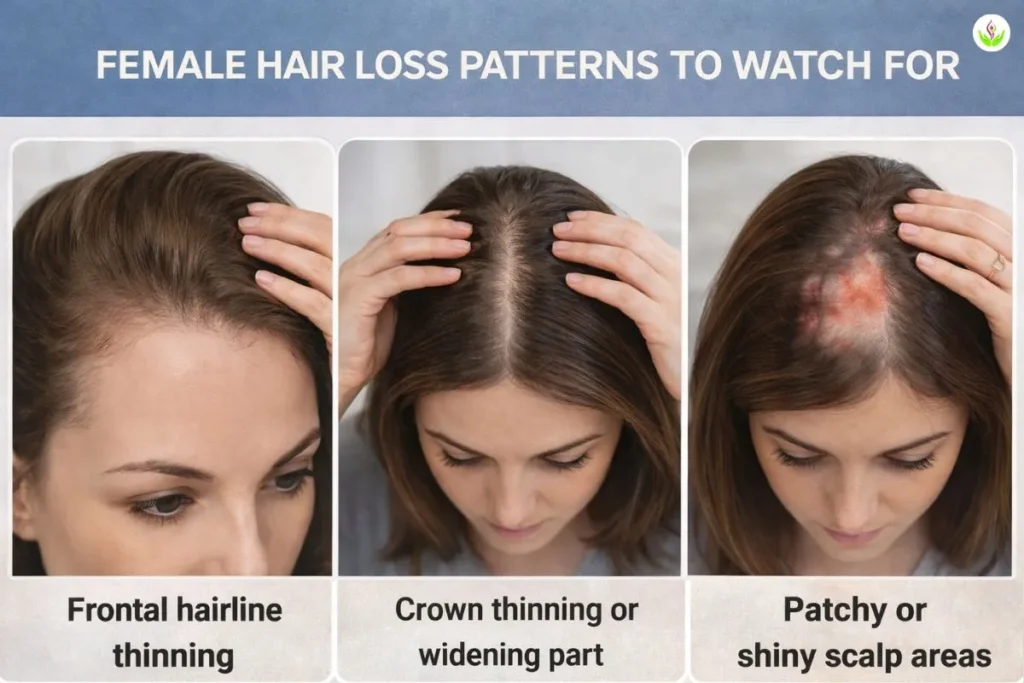
In my clinic, I always tell women that pattern matters more than the amount of hair fall. Certain visible changes suggest that hair loss needs medical attention rather than home remedies. Recognising these early signs of hair loss in women allows timely diagnosis and helps prevent further progression.
- Frontal hairline thinning:
Gradual thinning along the temples or frontal margin is often overlooked. Female hair loss frontal hairline can be caused by traction from tight hairstyles, hormonal sensitivity, or early female pattern hair loss. When detected early, progression can often be slowed. - Crown thinning or widening part:
A slowly widening central part or reduced volume on the crown is a classic sign of female pattern hair loss. This type of thinning is usually progressive and benefits from early, consistent medical management. - Patchy or shiny scalp areas:
Sudden round patches, smooth shiny skin, or areas with redness and scaling are not normal shedding. These patterns may indicate autoimmune or scarring conditions and should be evaluated promptly to prevent permanent loss.
Can Female Hair Loss Be Reversed?
This is one of the most important questions women ask me, especially when they search how to regrow thinning hair. The honest answer is simple: some types of female hair loss are fully reversible, while others need long-term management. Identifying which category you fall into early makes a significant difference.
Fully Reversible Hair Loss
Hair loss is usually reversible when it is caused by temporary or correctable triggers. Once the trigger is addressed and the hair cycle stabilises, regrowth often follows naturally with appropriate support.
Common reversible causes include:
- Nutritional deficiencies (iron, vitamin D, B12)
- Post-viral hair shedding (Covid, dengue, viral fever)
- Stress, illness, or childbirth (telogen effluvium)
Manageable but Long-Term Hair Loss
Some types of hair loss are not instantly reversible, but they are very much manageable with consistent treatment and follow-up.
These include:
- Female pattern hair loss (genetic thinning)
- Hormonal thinning (including PCOS-related hair loss)
In these cases, the goal is to:
- Slow further progression
- Improve existing hair density
- Preserve current hair rather than expect a one-time cure
The Reality of Hair Regrowth Timelines
Hair regrowth is slow by nature. Even after the correct treatment begins, visible improvement typically takes 3 to 6 months. Expecting rapid regrowth in a few weeks often leads to frustration and unnecessary treatment changes.
Doctor’s clarity:
Female hair loss can often be controlled and, in many cases, partially reversed — but only when the cause is correctly identified and expectations are realistic. Early diagnosis and patience are as important as the treatment itself.
How to Stop Hair Fall Immediately – Medical Truth vs Myths
When women ask how to stop hair fall immediately, I explain honestly that I cannot stop hair fall overnight, but I can temporarily reduce shedding while treating the real cause.
What can help in the short term:
- Removing the trigger (fever, illness, stress, crash dieting)
- Correcting proven deficiencies (iron, vitamin D, B12)
- Reducing hair stress (tight hairstyles, heat tools, chemical treatments)
What does not work, despite popular belief:
- Oils, onion juice, rice water, or viral home remedies
- “Instant regrowth” shampoos and serums
- Random supplements taken without blood tests
The medical truth is that long-term control happens only when the underlying cause is identified and treated. Once the hair cycle stabilises, shedding slows down naturally and regrowth follows with time.
Best Hair Loss Treatment for Female Patients Depends on Diagnosis
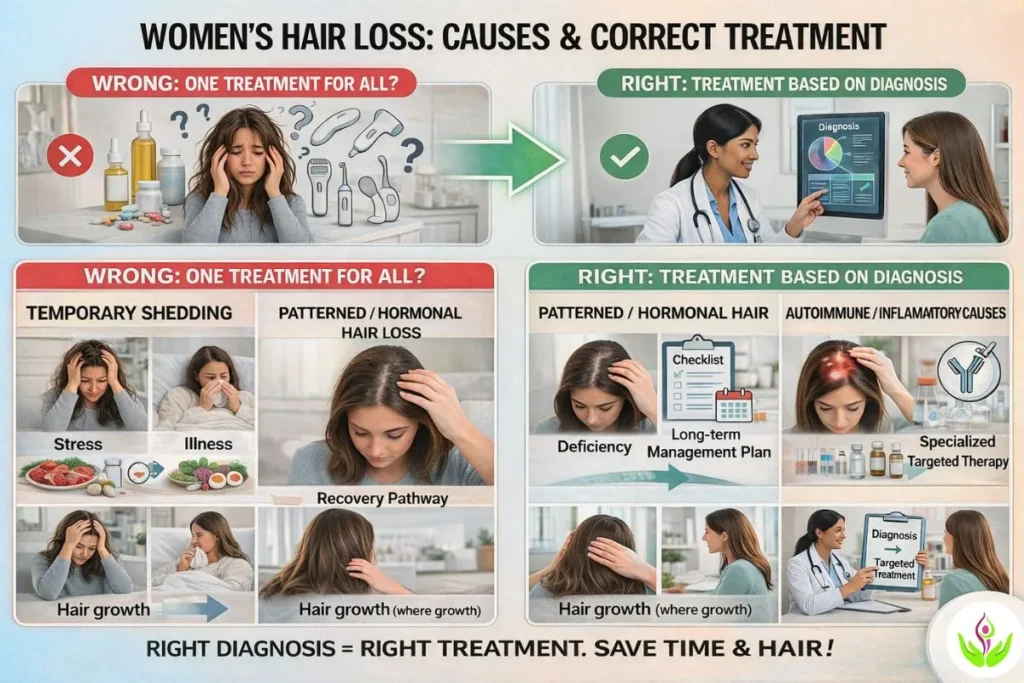
In my clinic, one myth I address immediately is the idea that there is a single best hair loss treatment for female patients. Hair loss does not work that way. Different causes need different treatments, and using the wrong approach often wastes time, money, and hope.
Hair loss treatment works best when it is diagnosis-based:
In some women, doctor-recommended hair loss procedures such as PRP hair treatment may be advised as part of a personalised plan, depending on the diagnosis and stage of hair loss.
- Temporary shedding improves when the trigger (stress, illness, deficiency) is corrected.
- Patterned or hormonal hair loss needs long-term medical management.
- Autoimmune or inflammatory causes require targeted therapy, not cosmetic solutions.
What I focus on is ethical expectation setting. Some treatments aim to reverse hair loss, others aim to slow progression and preserve existing hair. Promising instant or guaranteed regrowth is neither realistic nor responsible.
Doctor’s clarity:
The right treatment is the one that matches your diagnosis. Anything else is trial-and-error, and trial-and-error rarely gives stable results.
When Should You See a Doctor for Hair Loss?
Many women wait too long, hoping hair fall will settle on its own. While mild, short-term shedding can be normal, there are situations where medical evaluation should not be delayed.
You should see a doctor if you notice:
- Sudden or persistent excessive hair fall lasting more than a few weeks.
- Visible thinning, widening part, or frontal hairline recession.
- Patchy hair loss, scalp redness, itching, pain, or scaling.
It is also important to understand that emotional distress is a valid reason. If hair loss is affecting your confidence, sleep, or mental well-being, it deserves attention.
The biggest advantage of seeing a doctor early is timely diagnosis. Early evaluation often means simpler treatment, better control, and less long-term damage.
Hair Loss Diagnosis in Delhi – What to Expect at Care Well Medical Centre
When you visit my clinic in Delhi, the process is structured, calm, and diagnosis-focused. We begin with a detailed discussion about your hair fall pattern, triggers, medical history, and lifestyle. This is followed by scalp and hair examination, and tests are advised only if clinically required.
The diagnostic cost range usually varies between ₹2,000–₹6,000, depending on whether blood tests or advanced scalp analysis are needed.
Care Well Medical Centre is easily accessible from across Delhi NCR, and the aim is always clarity first, treatment later—without rushing or over-testing.
Doctor’s Summary
Hair loss in women is rarely random. It is usually triggered by stress, illness, nutritional deficiency, hormonal imbalance, or genetic sensitivity. Correct diagnosis begins with understanding the pattern, followed by focused examination and selective testing. Most types of hair loss are manageable, and many are reversible when addressed early. Panic treatments and self-medication often delay recovery. A calm, diagnosis-based approach leads to better control, realistic expectations, and healthier regrowth over time.
Conclusion: Hair Loss in Women Is Manageable When Diagnosed Correctly
Hair loss can be emotionally overwhelming, but panic and self-medication rarely help. What makes the real difference is early, accurate diagnosis. When the cause is identified in time, treatment becomes simpler, more effective, and far less stressful. I always encourage women to seek evaluation calmly rather than waiting or experimenting blindly. With the right guidance, hair loss is manageable—and you do not have to face it alone.
FAQs About Hair Loss in Women
In most cases, excessive hair fall is triggered by stress, illness, nutritional deficiencies (iron or B12), hormonal changes, or events like childbirth or viral fever. In most women, excessive hair fall points to an internal trigger such as stress, deficiency, or hormonal change.
In females, hair thinning most often occurs due to follicle sensitivity to androgens, thyroid disorders, or PCOS-related hormonal shifts. In many cases, it is the sensitivity of the hair follicle, not high hormone levels, that causes thinning.
Low iron stores (ferritin) are the most frequent vitamin-related cause of hair loss seen in women. Vitamin D and Vitamin B12 deficiencies are also frequent contributors. Supplements should be taken only after blood tests confirm a deficiency.
Yes. Sudden hair shedding in women is usually temporary and improves once the triggering event resolves. Once the trigger settles, the hair cycle usually normalises.
Medically, hair fall cannot stop instantly because hair growth follows a fixed biological cycle. Shedding can be reduced temporarily by removing triggers, correcting deficiencies, and avoiding heat or tight hairstyles while treatment takes effect.
Yes, in many cases. Thinning caused by nutritional or temporary factors often regrows. Genetic and hormonal thinning respond best to long-term management rather than expecting complete reversal.
Thinning along the frontal hairline deserves early evaluation to prevent progression or permanent loss. It may be due to traction, hormonal sensitivity, or early female pattern hair loss. Early medical evaluation helps prevent further progression.
Yes. PCOS can cause hair thinning due to increased androgen activity. It often occurs alongside irregular periods, acne, or weight changes and requires long-term medical and lifestyle management.
A doctor should be consulted if hair loss continues, worsens, or shows a clear pattern over time. Early diagnosis helps preserve existing hair and reduces anxiety.
Author | Medical Review | Disclaimer
Author & Medical Reviewer:
Dr Sandeep Bhasin
Senior Cosmetic Surgeon & Wellness Expert
Care Well Medical Centre
Last medically reviewed: January 2026
Disclaimer:
This information is for educational purposes only and does not replace a personal medical consultation. Diagnosis and treatment vary based on individual health, age, and medical history. All treatments are subject to medical evaluation, and Care Well Medical Centre follows applicable CDSCO and Delhi Health Department guidelines.